How to Care for Vintage Silk & Delicate Fabrics
- By Fabcouture
A silk saree passed down from your mother or grandmother is more than fabric — it carries memories, craftsmanship, and decades of history in its weave. But silk is a natural protein fibre, and vintage or delicate fabrics are far less forgiving than everyday cotton: the wrong wash, a sunny windowsill, or a plastic storage bag can leave you with yellowing, permanent creases, or fibres that split along the folds. The good news is that preserving delicate fabrics comes down to a few gentle habits. This guide covers how to wash, dry, iron, and store vintage silk and other delicate fabrics so your most treasured pieces stay beautiful for generations.
Quick Answer
To care for vintage silk and delicate fabrics, avoid machine washing and harsh detergents — hand wash plain silk gently in cold water with a pH-neutral cleanser, or dry clean anything with zari, embroidery, or beadwork. Never wring or tumble dry; roll the fabric in a towel and air dry flat in the shade. Store it folded (not hung) in a cool, dark place, wrapped in cotton or muslin with acid-free tissue between the folds, and refold every few months to stop permanent creases from forming.
Why Vintage Silk and Delicate Fabrics Need Special Care
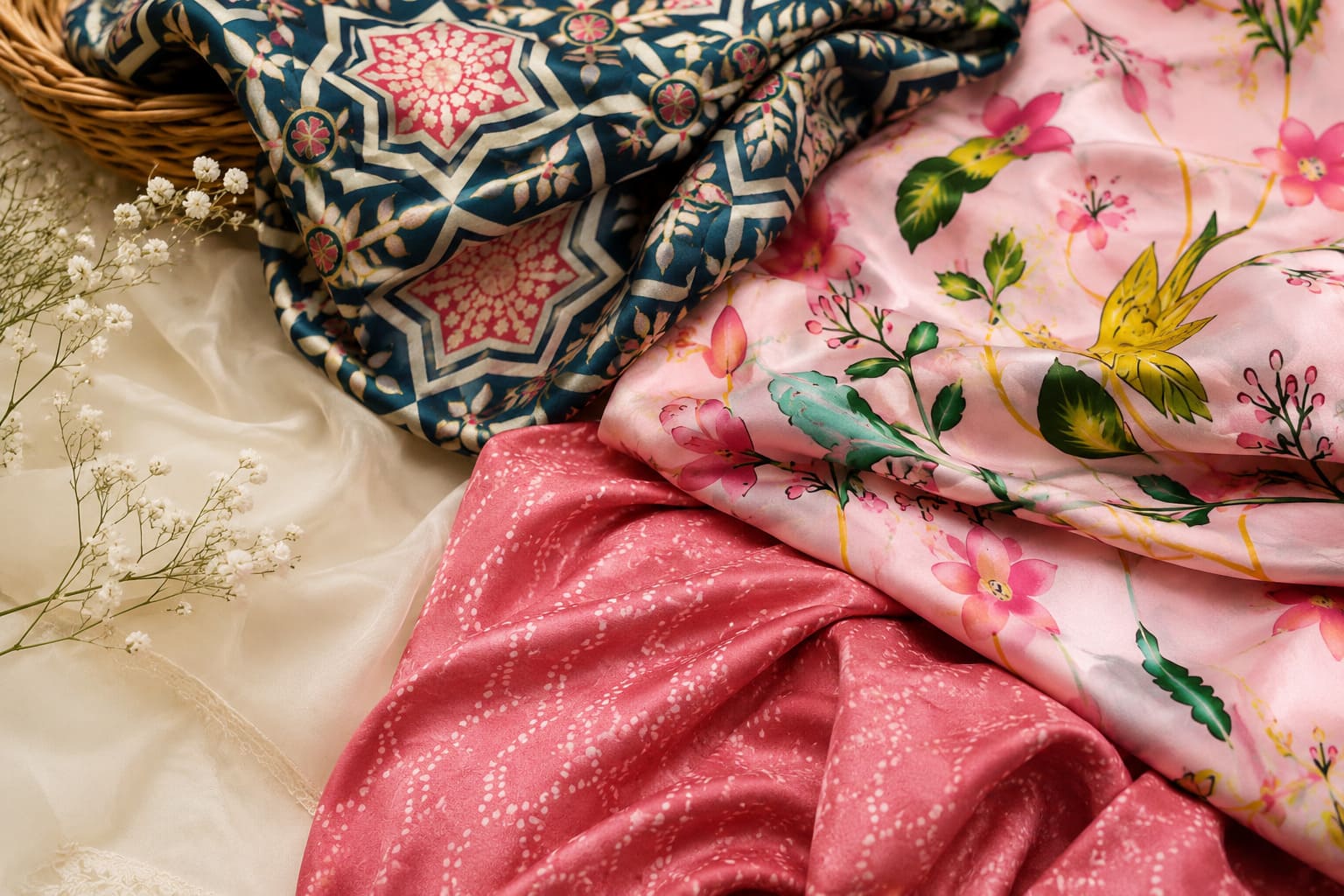
Silk is a natural protein fibre — closer to hair than to cotton — which makes it lustrous and surprisingly strong, but also sensitive to heat, moisture, sunlight, and harsh chemicals. Vintage silk adds another layer of fragility: older dyes can bleed, zari (metallic thread) tarnishes and blackens as it oxidises, and fibres weaken wherever the fabric has been folded the same way for years. Whether it is a pure silk saree or a fine chiffon dupatta, gentle handling is not optional — it is the whole point.
How to Wash Vintage Silk and Delicate Fabrics
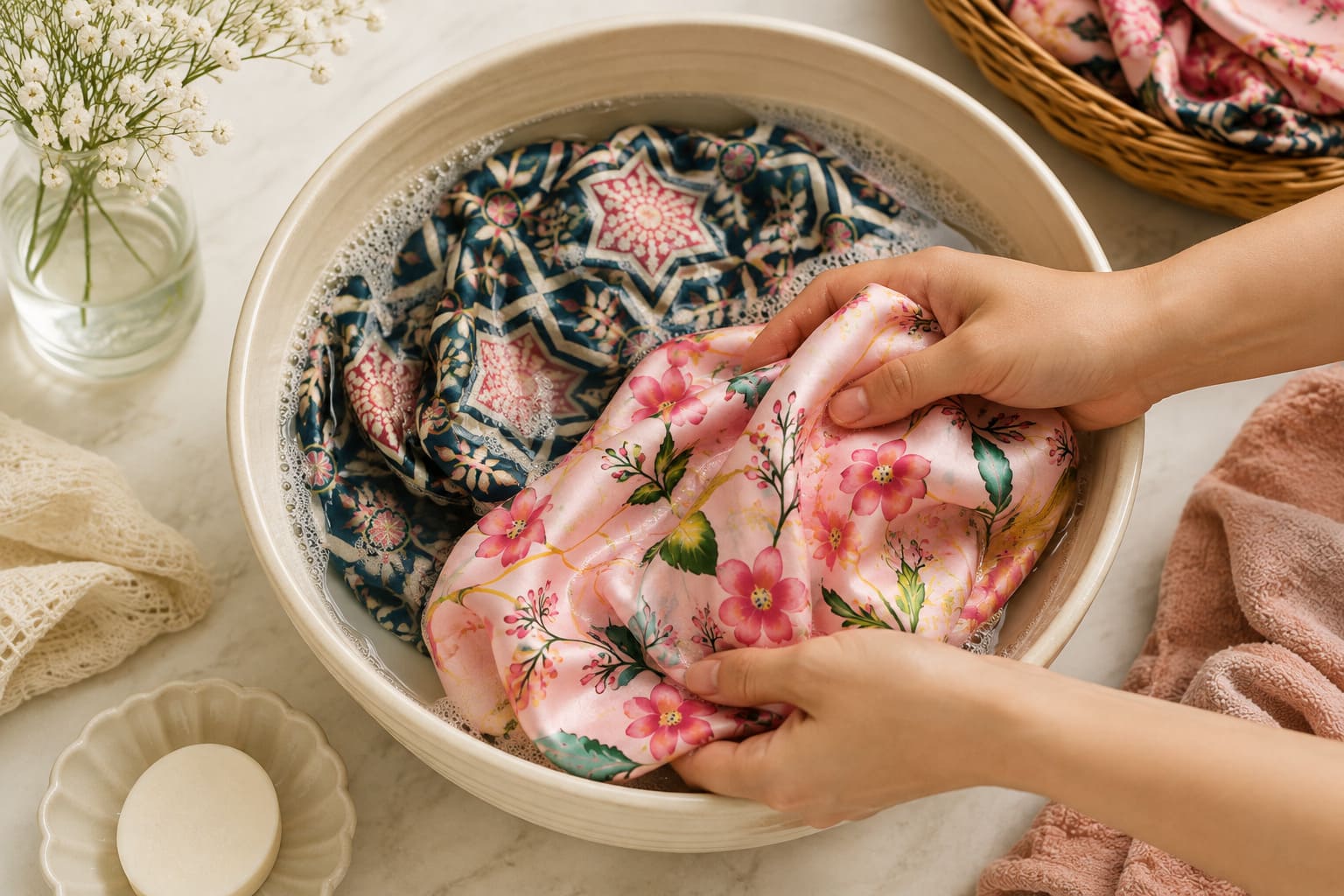
The first rule is simple: when in doubt, don't wash — dry clean. Any silk with real zari, heavy embroidery, beadwork, or a woven border should go to a professional dry cleaner experienced with delicate fabrics, as water and home washing can cause colour bleeding, shrinkage, and damage to embellishments. Plain silk without zari, and many fine synthetics, can be hand washed if you are careful:
- Test first. Dab a hidden corner with a damp white cloth to check the dye doesn't transfer — especially important on vintage pieces.
- Use cold water and a mild, pH-neutral detergent made for silk or delicates (a little baby shampoo works too). Never use regular detergent, which is alkaline and strips silk, or any kind of bleach.
- Be gentle. Swish for a minute or two — don't soak, scrub, wring, or twist.
- Rinse cold. A capful of white vinegar in the final rinse removes detergent residue and restores silk's natural shine.
Wash one piece at a time, and keep strong colours separate to avoid any transfer.
How to Dry Silk Without Damaging It
How you dry silk matters as much as how you wash it:
- Never wring or twist. It distorts the weave and sets permanent creases. Instead, lay the fabric flat on a clean towel, roll the towel up, and press gently to draw out the water.
- Air dry away from sunlight and heat. Direct sun fades colours and weakens silk fibres over time.
- Dry flat or over a padded hanger, and never use a tumble dryer — its heat and tumbling shrink and damage delicate fabrics.
- Reshape while damp so the fabric dries in its proper shape.
How to Iron Silk and Delicate Fabrics Safely
- Use the lowest heat or the dedicated "silk" setting, and iron while the fabric is still slightly damp.
- Always iron on the reverse side, with a thin cotton pressing cloth between the iron and the fabric to avoid scorching and shine marks.
- Skip the steam bursts — stray water droplets can leave spots on silk.
- For zari, embroidery, or velvet, don't iron directly at all. Steaming is safer — hold a garment steamer at a distance or hang the piece in a steamy bathroom. Velvet especially should never be pressed flat, as it permanently crushes the pile.
How to Store Silk Sarees and Delicate Fabrics
Storage is where most vintage silk is won or lost. These habits keep heirloom silk sarees pristine for decades:
- Fold, don't hang. Hanging heavy silk for long periods stretches and warps it under its own weight. If you must hang a piece, use a padded hanger — never metal, which can rust and leave permanent stains.
- Wrap in cotton or muslin, never plastic. Plastic traps moisture and causes yellowing and mildew, while breathable cotton lets the fabric air and shields it from dust and pests.
- Place acid-free tissue between the folds. It prevents permanent crease lines, stops colours transferring, and keeps zari from rubbing against the silk. Ordinary paper and cardboard are acidic and will yellow silk over time.
- Refold every 3 to 6 months, changing the fold lines. Folding along the same lines for years weakens the fibres until they split — you'll see it as a pale line across the fabric, often mistaken for a stain. Rotating the folds spreads the stress.
- Store cool, dark, dry, and ventilated. Avoid sunlight, heat, and damp spots like basements or near kitchens. Keep humidity in check with a few silica gel packets, and use natural repellents like dried neem leaves or lavender rather than naphthalene mothballs, whose smell clings to silk and dulls it.
- Protect the embellishments. Fold along the natural weave rather than across borders or patterns, and store heavily embroidered pieces flat and loosely folded.
- Let them breathe. Air unworn pieces every few months — but don't over-clean, since repeated dry cleaning gradually strips silk's natural lustre.
Caring for Other Delicate Fabrics
Silk isn't the only fabric that rewards a gentle touch. Here's how to handle the other delicates in your wardrobe:
| Fabric | Washing | Drying & ironing | Good to know |
|---|---|---|---|
| Chiffon | Hand wash cold and gentle; dry clean if it's silk chiffon | Air dry; low iron with a pressing cloth | Very fine and slippery — handle minimally to avoid snags and pulls |
| Organza | Hand wash gently or dry clean | Low iron with a pressing cloth | Crisp weave creases easily — store rolled or flat, not tightly folded |
| Georgette | Hand wash cold with no wringing, or dry clean | Air dry in shade; low iron | Drapes beautifully but pulls easily — keep away from rough surfaces |
| Velvet | Spot clean or dry clean | Never iron flat — steam from the reverse | Store on padded hangers or rolled to protect the pile from crushing |
Frequently Asked Questions
Can you wash vintage silk at home?
Plain silk without zari or embroidery can be gently hand washed in cold water with a mild, pH-neutral detergent. But vintage silk with zari, beadwork, or heavy embroidery — or any piece whose dye bleeds when you test it — should be dry cleaned by someone experienced with delicate fabrics.
How do you keep silk sarees from yellowing?
Store them clean, in a cool dark place, wrapped in cotton or muslin rather than plastic, with acid-free tissue between the folds. Keep humidity low with silica gel and avoid direct sunlight, which fades and weakens silk over time.
Why should you refold silk sarees regularly?
Folding a saree along the same lines for years weakens the silk fibres at those creases until they split, leaving a pale line that looks like a stain. Refolding every 3 to 6 months and changing the fold lines spreads the stress and keeps the fabric strong.
Is it better to fold or hang silk sarees?
Fold them. Hanging heavy silk for long periods stretches and distorts the fabric. If you do hang a lighter piece, use a padded hanger, never a metal one, which can rust and mark the fabric.
Can delicate fabrics like chiffon and organza be ironed?
Yes, but only on the lowest heat, on the reverse side, with a cotton pressing cloth between the iron and the fabric. For zari, embroidery, or velvet, steam the piece instead of ironing it directly.
How should you remove a stain from vintage silk?
Blot gently — never rub — and test any treatment on a hidden area first. For valuable or embellished pieces, take them to a professional, as harsh rubbing or home stain removers can permanently damage silk and its dyes.
Leave a Comment

Fabcouture is an online fabric store to satisfy all your couture fabrics cravings for fabric connoisseurs. We delight in the fact that we source...
0 Comment