Crepe Fabric: Types, Best Uses and Price Per Metre in India
- By Fabcouture
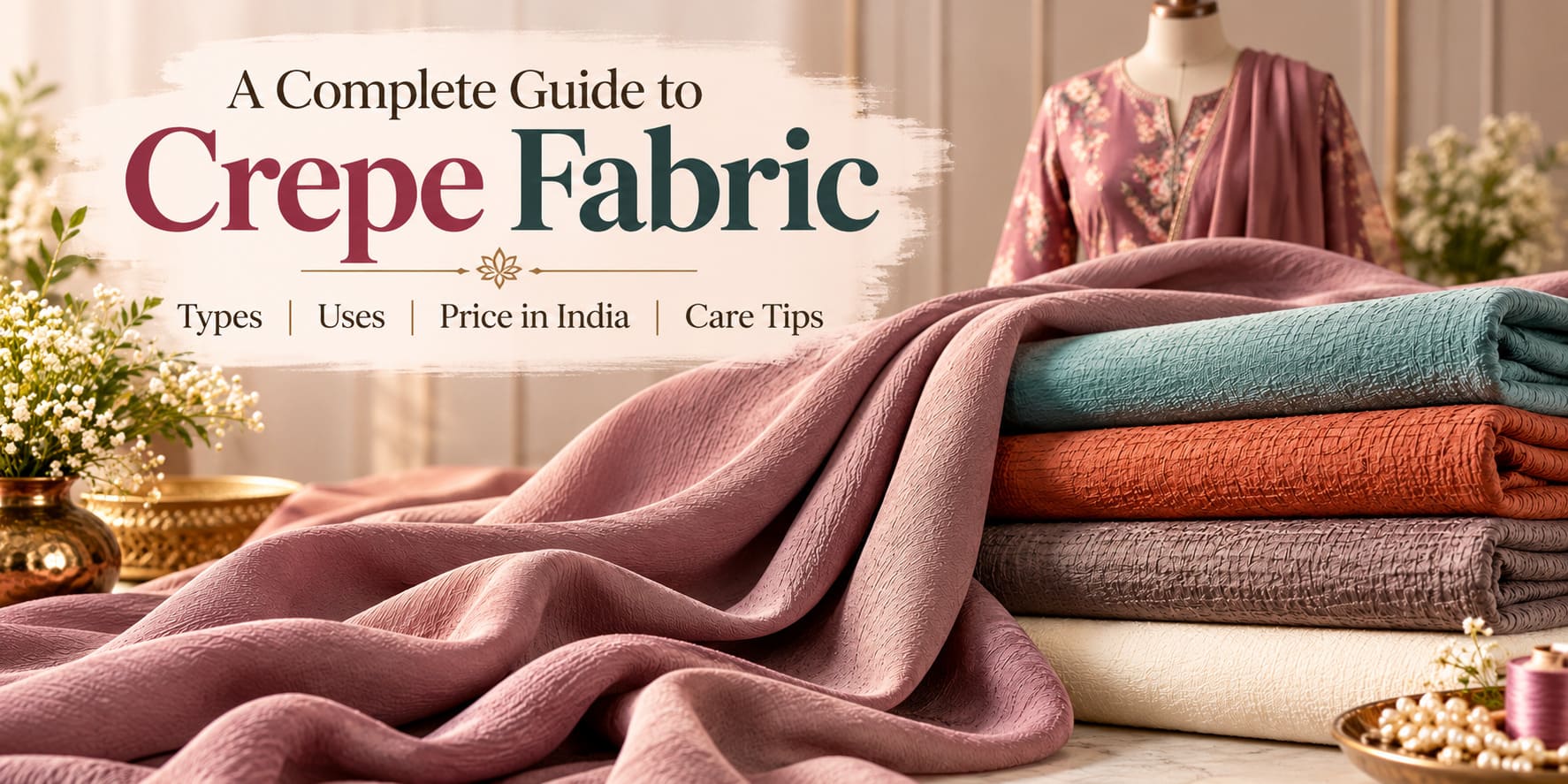
Walk into any Indian wardrobe and you will almost always find something made of crepe: an office kurta, a party-wear gown, a printed salwar suit or a lightweight saree. There is a good reason. Crepe fabric drapes softly, resists wrinkles, takes dye and prints beautifully and stays easy on the pocket. Here is what makes crepe so popular, the types you will find, what to stitch with each and what it costs per metre in India.
What Is Crepe Fabric?
Crepe is a lightweight fabric with a crinkled, slightly pebbly surface. That texture comes from tightly twisted yarns, which are woven so that the cloth puckers naturally. The twist gives crepe its trademark drape, a matte finish and a springy feel that hides creases well. Crepe can be made from silk, polyester, viscose, wool or blends, and the fibre decides how it feels, how it flows and how much it costs.
Why Do Indians Love Crepe?
- Drapes well: It falls neatly on the body, so suits, palazzos and gowns look polished.
- Wrinkle resistant: It survives long travel and long days without looking crushed.
- Easy to stitch: It does not slip as much as satin or chiffon, so tailors enjoy working with it.
- Prints and colours: It holds bright, deep colours and digital prints very well.
- Budget friendly: Good crepe starts at an affordable price, which suits boutiques and home tailors alike.
Types of Crepe Fabric
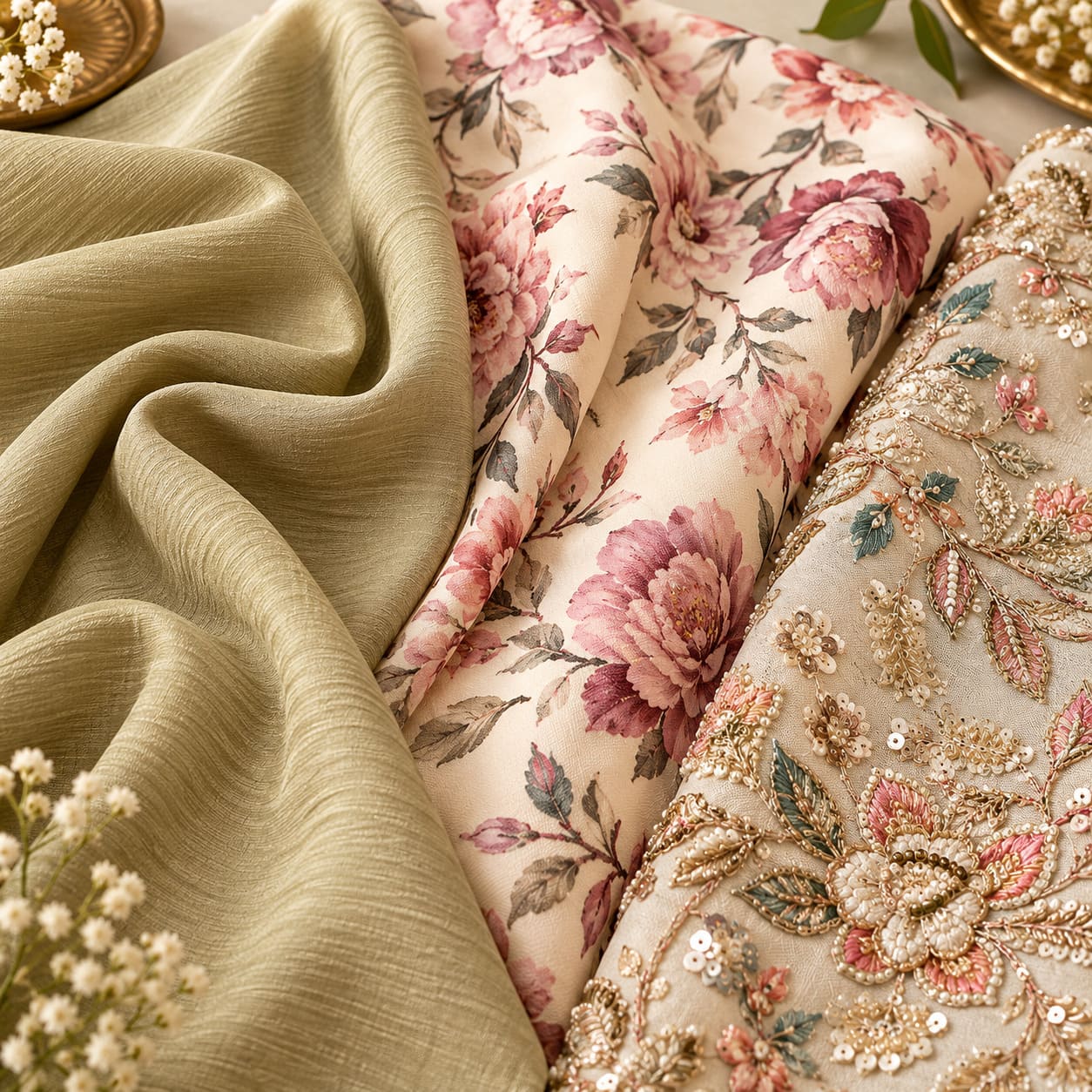
Not every crepe is the same. These are the types you will see most often:
- Plain crepe: A solid-colour crepe in dozens of shades. It is the base for suits, co-ords, dupattas and linings. Browse our plain crepe fabric range for ready colours.
- Printed crepe: Floral, geometric, abstract and digital designs on a crepe base. See our printed crepe fabric collection for everyday and festive prints.
- Embroidered crepe: Crepe finished with thread work, sequins or cutwork for wedding and party wear. Our embroidered crepe fabric adds richness without extra weight.
- American crepe: A light, soft, budget-friendly crepe that is widely used for kurtis, suits and dupattas.
- Japanese and Korean crepe: A slightly heavier, smoother crepe with a better fall, preferred for gowns, tops and premium suits.
- Georgette crepe: A sheer, flowy crepe that sits between crepe and georgette. It works for sarees, dupattas and layered outfits.
- Crepe de Chine and silk crepe: Fine, silky crepe with a gentle sheen, used for blouses, sarees and occasion wear.
- Moss crepe: A thicker crepe with a mossy, textured surface, popular for structured dresses and jackets.
What Can You Make With Crepe Fabric?
- Salwar suits, kurtis and co-ord sets: The most popular use, from office wear to festive outfits.
- Palazzos, trousers and skirts: The fall keeps the shape without clinging.
- Gowns and dresses: Heavier Japanese or Korean crepe is a safe choice for evening wear.
- Sarees and dupattas: Georgette crepe and silk crepe drape gracefully.
- Blouses and tops: Smooth, comfortable and easy to fit.
- Lining and layering: Light crepe is a good under-layer for sheer or embroidered outer fabrics.
For richer festive looks, pair a crepe kurta with a plain georgette fabric dupatta or use crepe as lining under embroidered pieces.
Crepe vs Georgette vs Cotton vs Satin
Buyers often confuse these, so here is a quick comparison. Georgette is sheerer, lighter and more flowy than crepe. Cotton fabric is more breathable and better for hot, humid weather, but it creases easily. Satin fabric is glossy and slippery, which looks glamorous but is harder to stitch. Crepe sits in the middle: matte, wrinkle resistant, easy to stitch and good in most seasons. If you want a classic natural alternative, silk fabric is the premium choice.
Crepe Fabric Price Per Metre in India
Crepe prices depend on the fibre, weight, finish and design. At FabCouture, plain crepe fabric starts from just ₹150 per metre, which makes it one of the best value fabrics for stitching. Printed and embroidered crepe cost more, and silk crepe sits at the premium end. Before buying, compare weight and width as well as the rate, because a heavier, wider crepe often saves fabric and falls better. Bulk and wholesale discounts are available for boutiques, and orders above ₹999 get free delivery with cash on delivery, @ best price.
How to Care for Crepe Fabric
- Check the label. Polyester crepe can be hand-washed, while silk and wool crepe are better dry cleaned.
- Use cold water and mild detergent. Hot water and hard scrubbing can dull the texture.
- Do not wring. Press gently, then dry in the shade.
- Iron on low heat on the reverse side, using a cloth over delicate crepe.
- Pre-wash before stitching if the fabric may shrink, especially silk or blended crepe.
How to Pick the Right Crepe
Start with the outfit. American crepe works well for everyday kurtis and suits, Japanese or Korean crepe for gowns and tops, and georgette crepe for sarees and dupattas. Hold the fabric to light: a good crepe has an even texture with no thin patches. Check that the print is crisp and does not bleed, and buy a little extra when the pattern needs matching.
Frequently Asked Questions
What is crepe fabric?
Crepe is a lightweight fabric with a crinkled, pebbly texture created by tightly twisted yarns. It can be made from silk, polyester, viscose or blends and is widely used for suits, kurtis, gowns and sarees.
Is crepe fabric good for summer or winter?
Light crepe such as American crepe is comfortable in mild and warm weather, while heavier Japanese and moss crepe work well in cooler months. It is a versatile fabric for most of the year.
What is the price of crepe fabric per metre in India?
Plain crepe starts from about ₹150 per metre. Printed, embroidered and silk crepe are priced higher depending on the fibre, weight and detailing.
Does crepe fabric wrinkle?
Crepe resists wrinkles better than most light fabrics because of its twisted yarns and textured surface, which is why it is popular for travel and office wear.
What is the difference between crepe and georgette?
Georgette is sheerer, lighter and more flowy, while crepe is slightly heavier, matte and has a firmer drape. Georgette crepe combines both qualities.
Ready to start stitching? Browse our full range of plain crepe fabric, add colour with printed crepe fabric and go festive with embroidered crepe fabric, all @ best price.
Leave a Comment

Fabcouture is an online fabric store to satisfy all your couture fabrics cravings for fabric connoisseurs. We delight in the fact that we source...
0 Comment