How to Remove Candle Wax From Fabric Without Ruining It
- By Fabcouture
Spilled candle wax on your favourite tablecloth, saree, or cushion cover and assumed it was ruined? It usually isn't. Dried candle wax looks permanent, but it lifts out of most fabrics with a warm iron, a few sheets of plain paper, and a little patience — no expensive products required.
This guide walks through exactly how to remove candle wax from fabric, step by step, including the oily mark and coloured dye that wax often leaves behind. It also covers the fabrics you should never put a hot iron near — like silk and velvet — and the quick fixes for other everyday stains while you are at it.
Quick Answer
To remove candle wax from fabric, first let the wax harden — pop the item in the freezer for 20 to 30 minutes to speed it up — then scrape off the excess with a blunt edge. Place the fabric between two sheets of plain paper and press with a warm, dry iron so the melting wax soaks into the paper. Move to a clean section and repeat until no more wax transfers, then treat any oily or coloured stain with a little dish soap or rubbing alcohol and launder as usual.
Why Candle Wax Is Trickier Than a Normal Stain
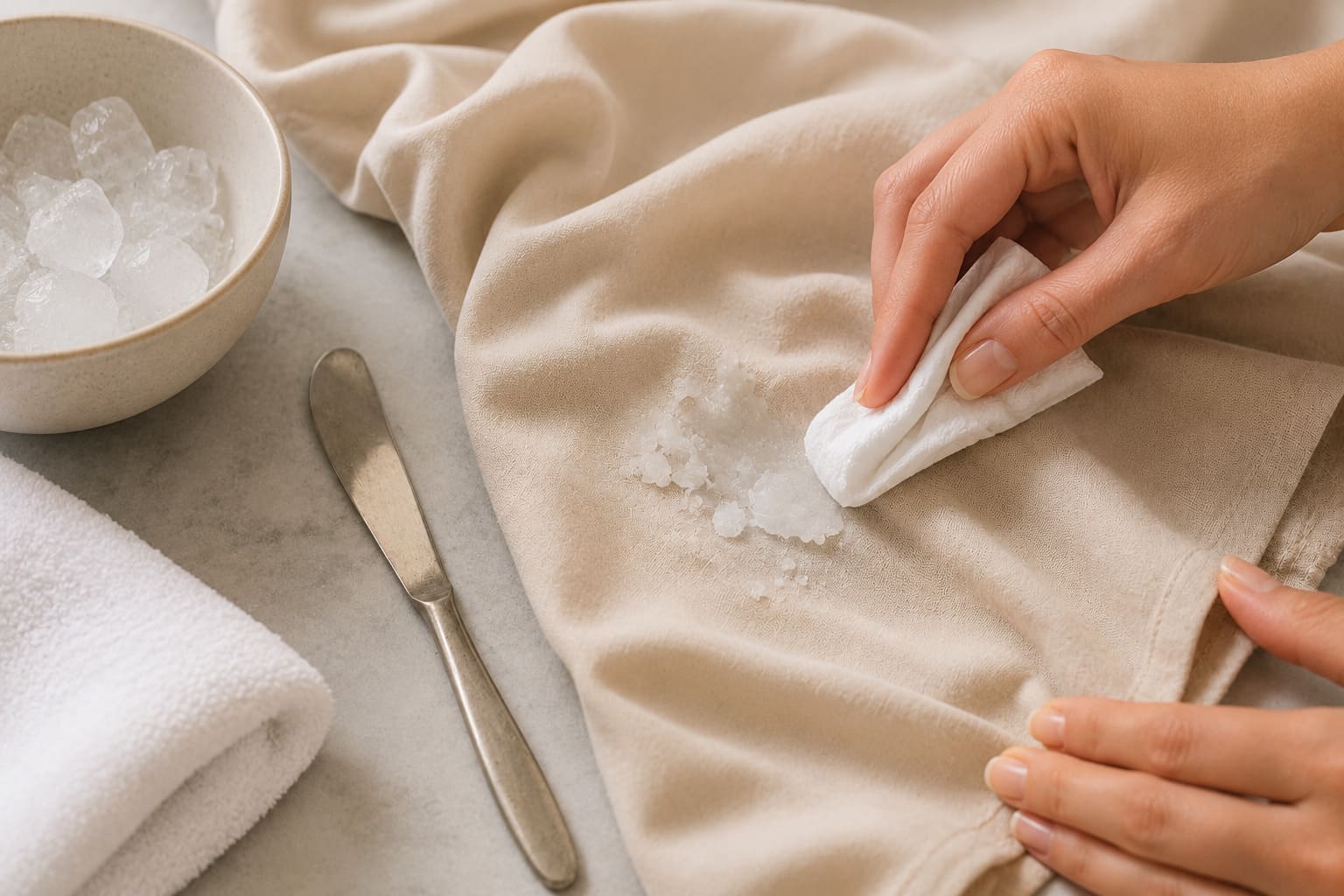
Candle wax is not really a stain in the usual sense — it is a solid that has cooled and gripped the weave of the fabric. That means two problems are happening at once:
- The wax itself has hardened into and around the fibres.
- An oily residue — and, with coloured candles, a dye stain — soaks into the fabric underneath.
Solve only the first and you are left with a greasy shadow. Solve only the second and you smear wax deeper into the cloth. The method below handles them in the right order, which is the whole secret.
What You Will Need
- A freezer, or a zip bag filled with ice
- A blunt scraper — a butter knife, spoon edge, or old credit card
- Plain paper — a brown paper bag or paper towels work best; avoid anything with printed ink that could transfer
- An iron
- Liquid dish soap or rubbing alcohol (isopropyl)
- Your normal laundry detergent
How to Remove Candle Wax From Fabric: Step by Step
Step 1 — Harden the wax
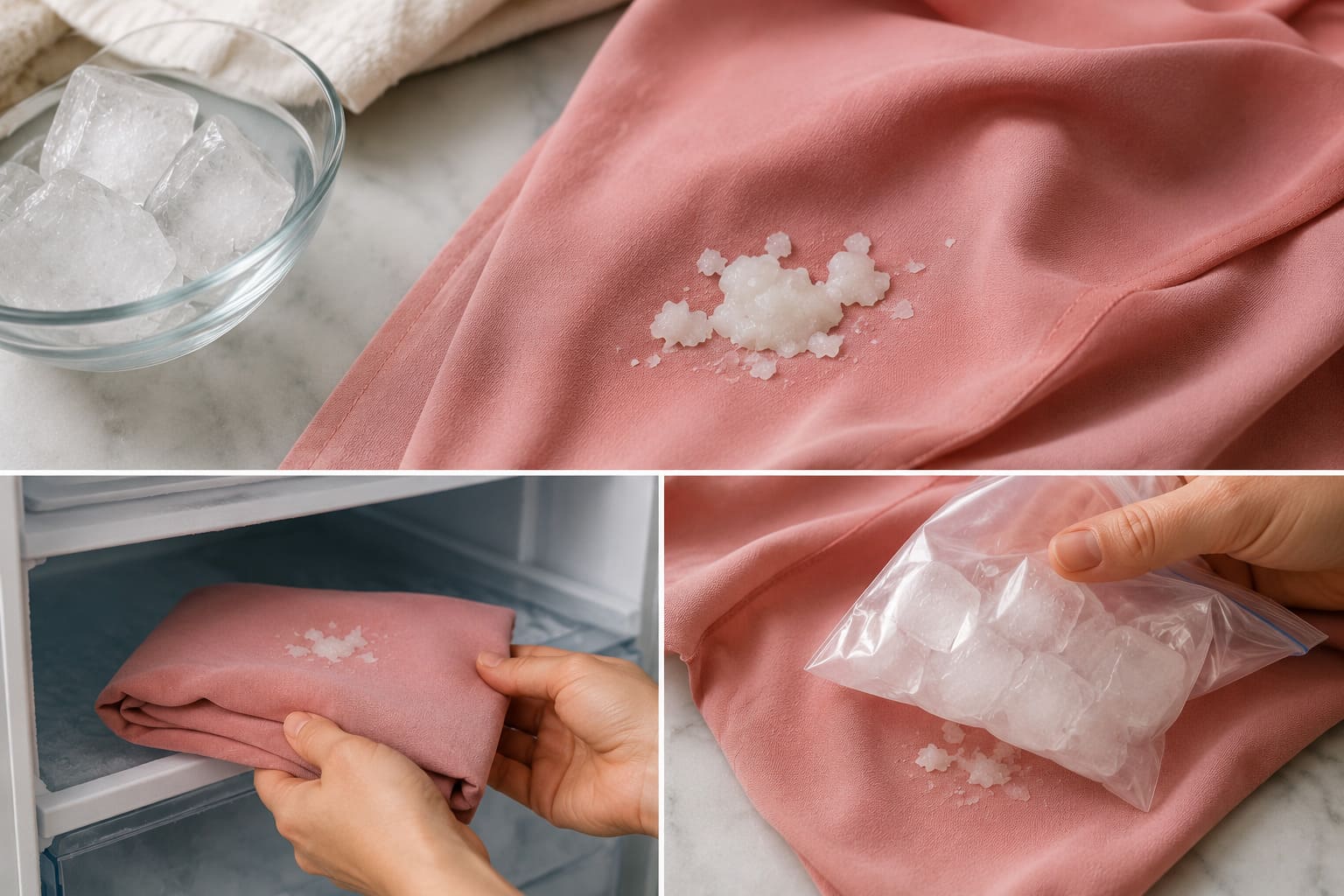
Never attack fresh, soft wax — you will only push it deeper. Let it cool completely. To speed things up, fold the item and place it in the freezer for 20 to 30 minutes, or press a bag of ice directly onto the wax until it turns brittle and cloudy.
Step 2 — Scrape off the excess
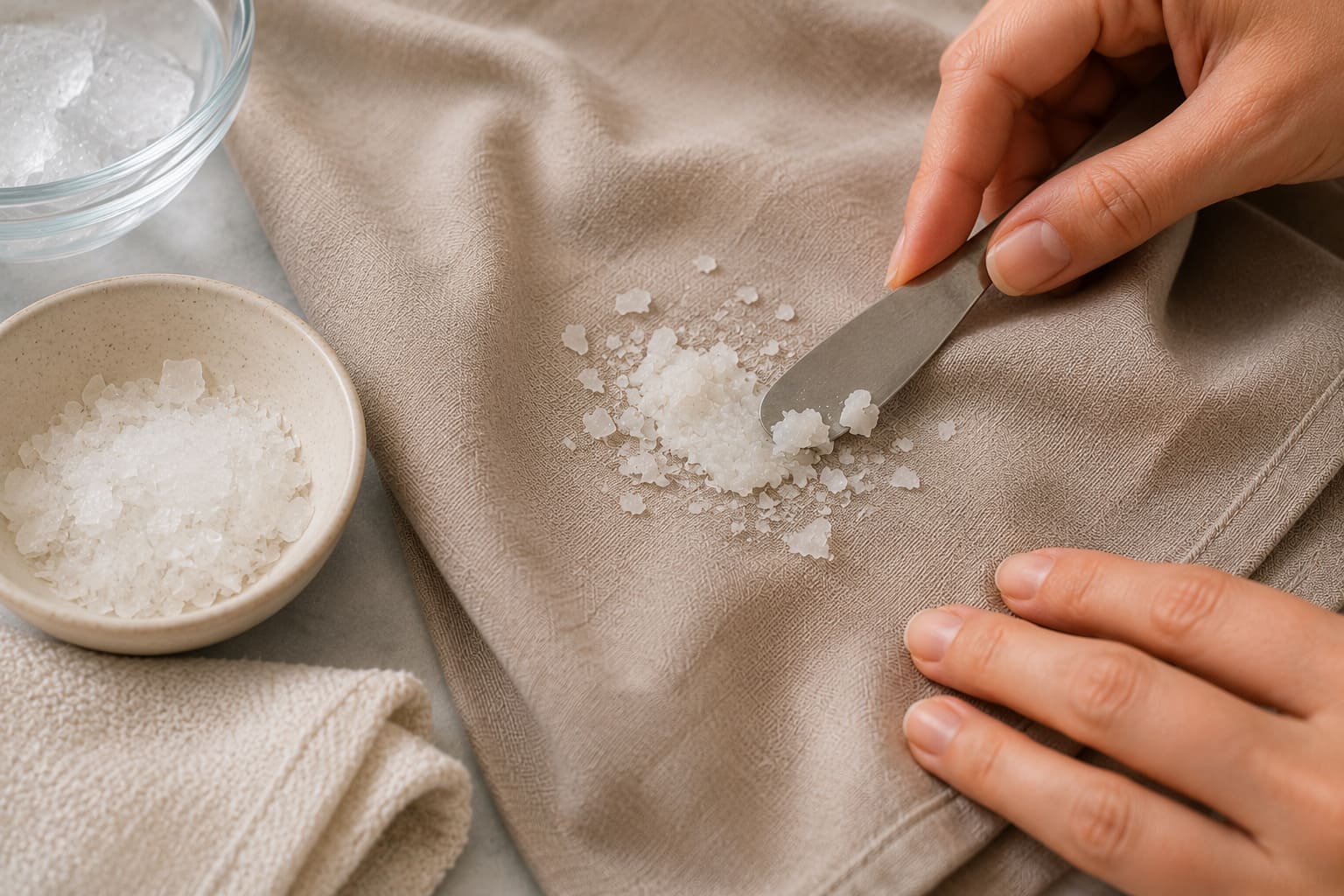
Once the wax is hard, gently chip and lift as much as you can with a blunt edge. Work from the outside of the blob toward the centre so you do not spread it. Keep the tool blunt — anything sharp can snag threads, especially on finer weaves. On a sturdy, tightly woven cotton you can be reasonably firm; on anything delicate, barely apply pressure.
Step 3 — Iron the wax into paper
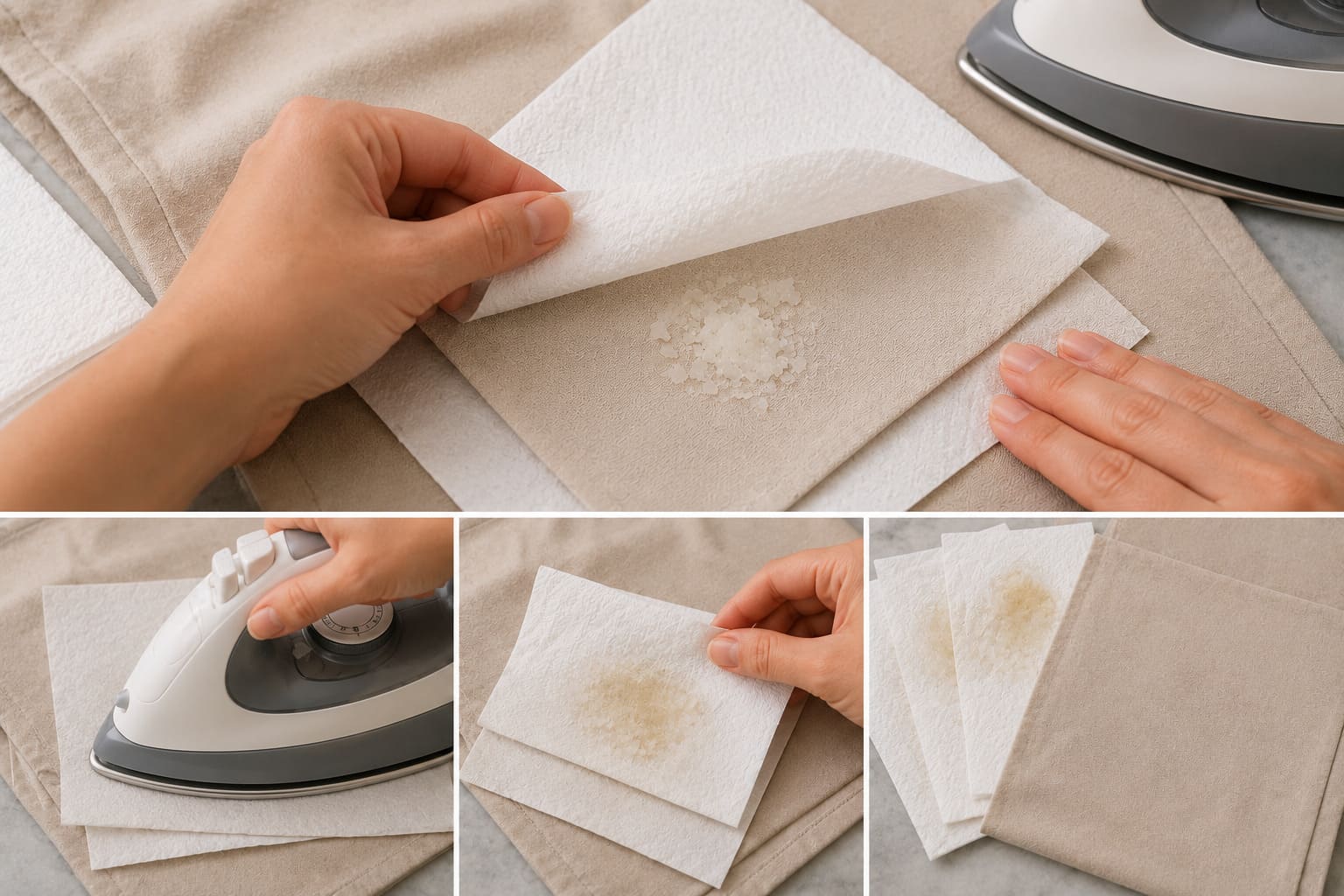
This is the step that does the heavy lifting. Lay the fabric flat and sandwich the waxy patch between two layers of plain paper or a folded paper towel — one layer above, one below. Set your iron to a low-to-medium, dry heat with no steam, and press gently over the paper for a few seconds. The heat re-melts the wax, and the paper wicks it straight out of the weave.
As the paper absorbs the wax, slide a clean section into place and repeat. You will watch the greasy patch shrink with each pass. Keep going until no more wax transfers to the paper.
Heat warning: Match the iron temperature to the fabric, and always start cooler than you think you need. This paper-and-iron method is safe for cotton, linen, muslin, and most sturdy weaves — but not for heat-sensitive fabrics like satin, silk, or velvet, or anything with beadwork or a synthetic sheen. See the delicate-fabric section below for those.
Step 4 — Treat the leftover oil and dye
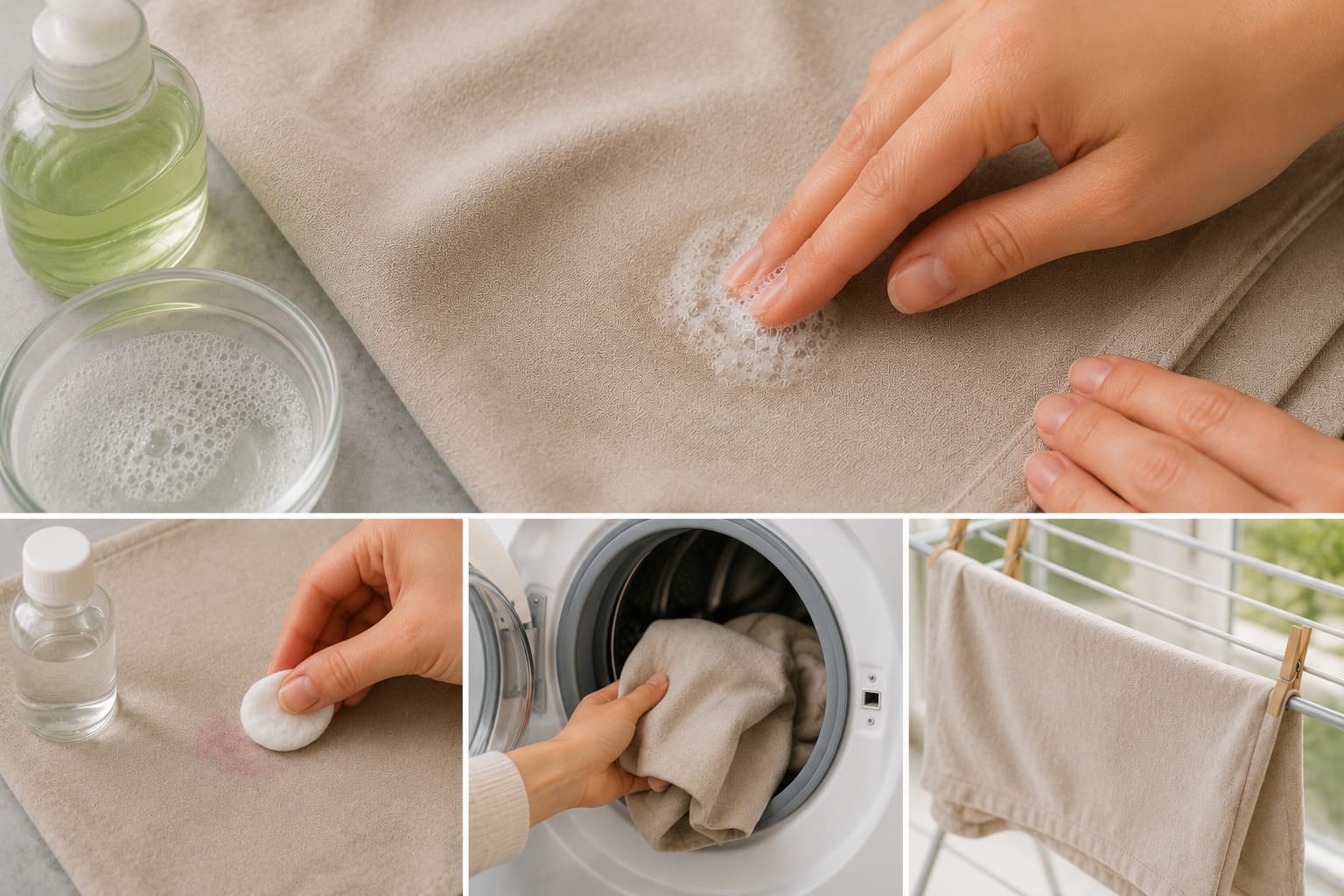
Even after the wax is gone, a faint greasy mark or a tint from coloured wax can remain. Dab a small amount of liquid dish soap directly onto the spot and work it in gently with your fingers — dish soap is designed to cut grease, which is exactly what candle-wax residue is. For a stubborn colour stain from dyed wax, dab with a little rubbing alcohol on a cotton ball, working from the outside in. Then launder the item as normal, following its care label, and let it air-dry. Check that the mark is fully gone before putting it through a hot dryer, since heat will set any residue you missed.
How to Remove the Oily Stain Candle Wax Leaves Behind
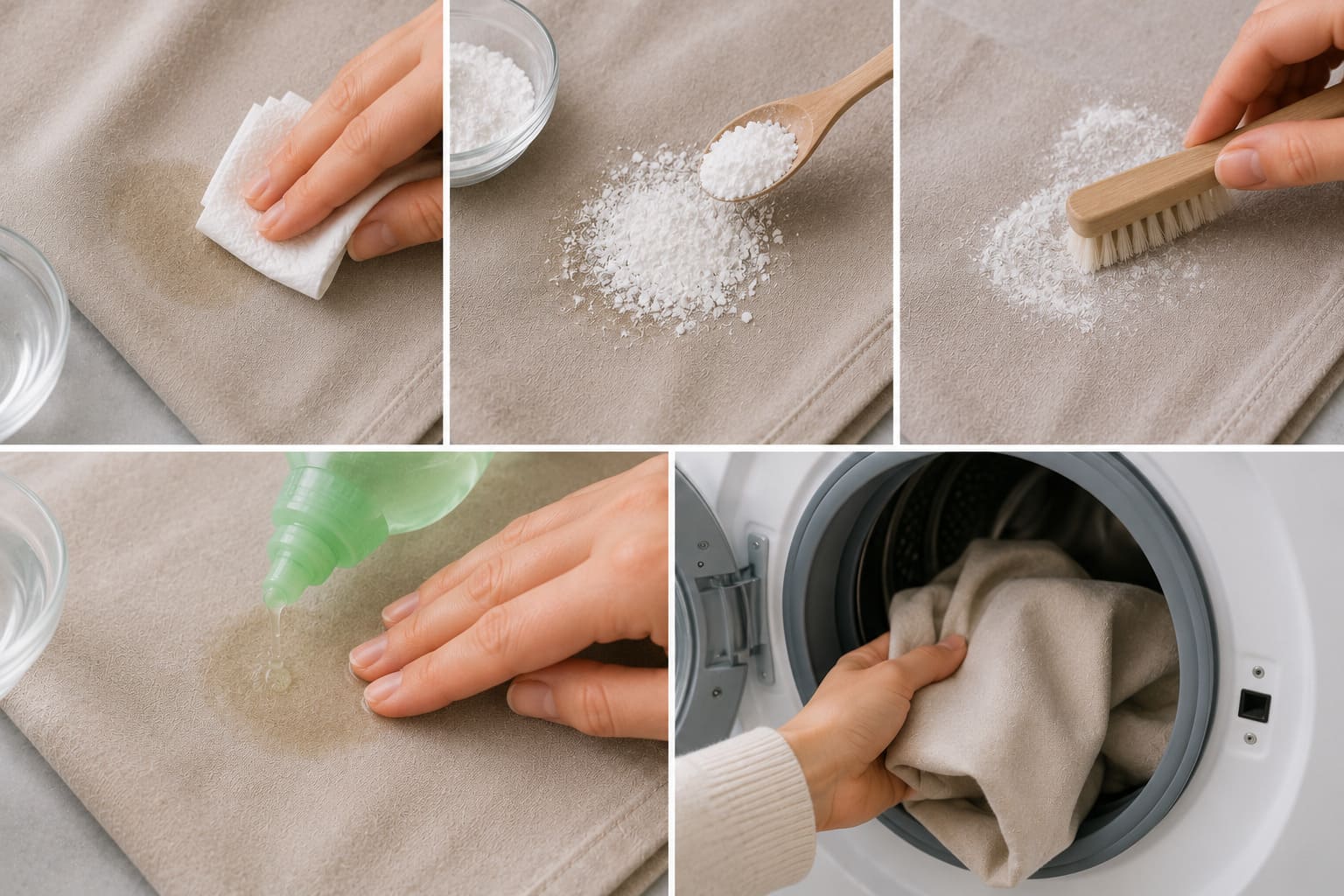
If your only remaining issue is the grease mark — the wax lifted cleanly but left a translucent patch — treat it exactly as you would any oil stain. This is the same technique people search for as how to remove oil stains from fabric:
- Blot, do not rub, to lift any surface oil.
- Sprinkle an absorbent powder — cornstarch, talc, or baking soda — over the mark and leave it for 10 to 15 minutes to draw the oil up.
- Brush the powder away, apply a few drops of dish soap directly to the stain, and work it in.
- Rinse with warm water and launder as usual.
The golden rule for anyone wondering how do I get oil out of fabric: keep heat away until the stain is completely gone. Hot water or a hot dryer will bake an oil mark permanently into the fibres.
Fabric Type Matters More Than the Stain
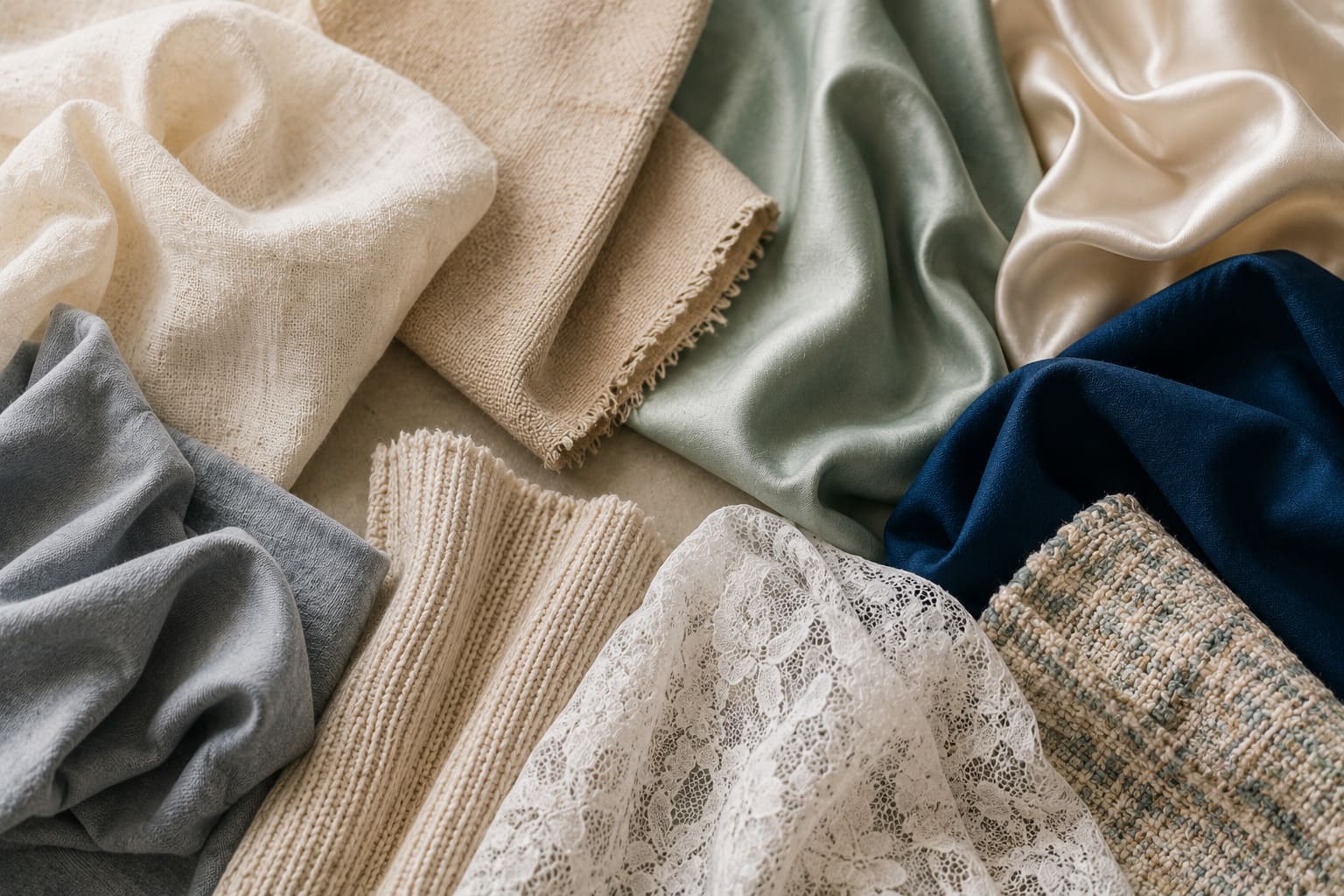
The single biggest factor in whether wax comes out cleanly is not the wax — it is what the fabric is made of. Whether it is a lightweight muslin napkin or a heavier drape, here is how the common ones behave:
| Fabric | Wax removal approach | Notes |
|---|---|---|
| Cotton | Freeze, scrape, iron method, then launder | Durable and forgiving; handles warm ironing and repeat washing well |
| Linen | Freeze, scrape, iron method on medium | Sturdy like cotton; press while slightly damp to avoid over-creasing |
| Muslin | Freeze, scrape, gentle iron | Lightweight but tough; use a lower heat as it is thinner |
| Silk | Freeze and scrape only — no iron | Heat-sensitive; finish with dry cleaning (see below) |
| Velvet | Freeze and scrape gently — no iron | Ironing crushes the pile permanently; steam from the reverse or dry-clean |
Because everyday, washable fabrics forgive the iron method so easily, they are the low-stress choice for anything that sees candles, cooking, or kids — one reason breathable weaves like linen are such practical picks for tablecloths, napkins, and daily wear.
How to Care for Vintage Silk and Delicate Fabrics
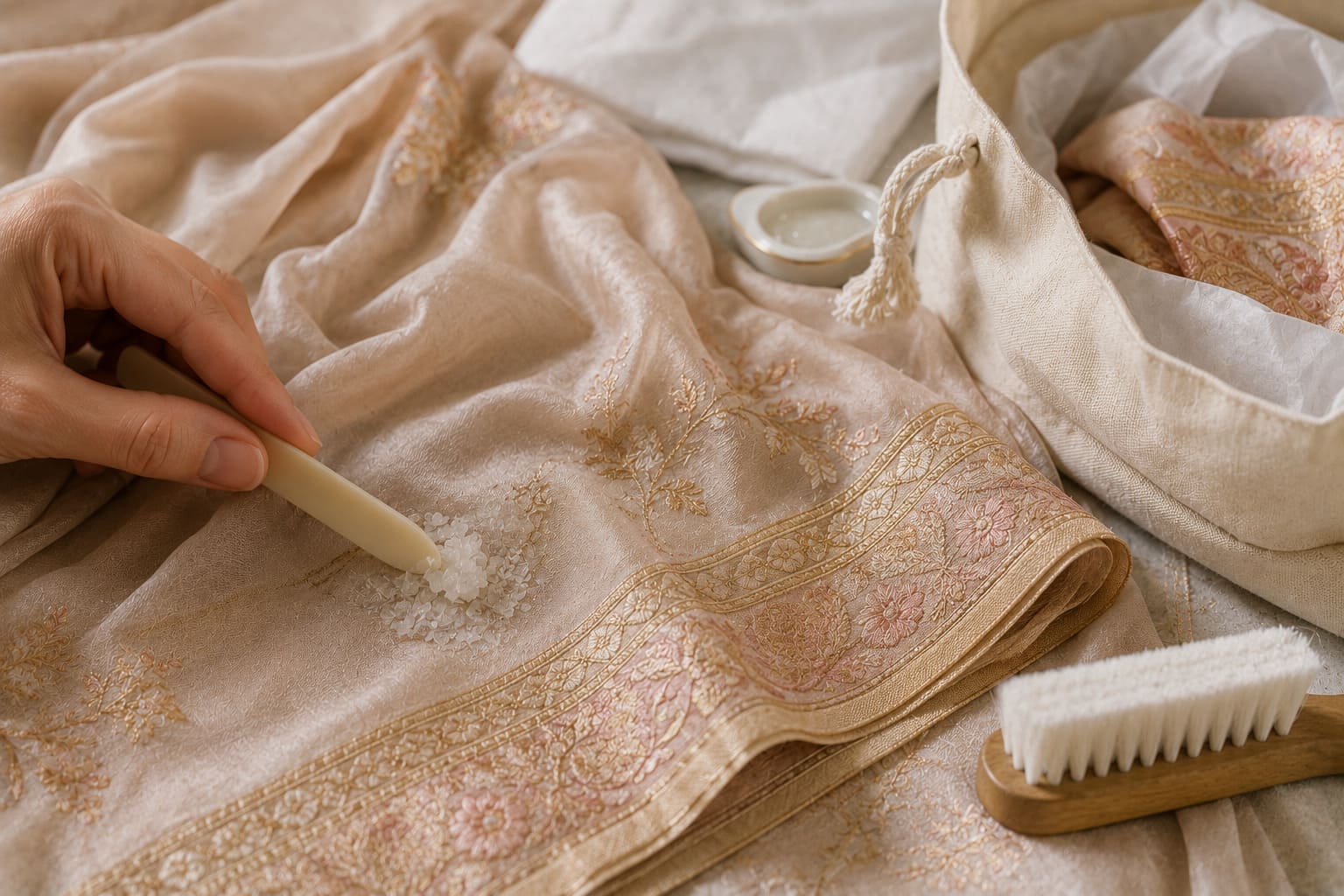
Silk, velvet, and heirloom pieces need a completely different approach — the iron method that rescues a cotton napkin will scorch, flatten, or water-mark them in seconds. If you are wondering how to care for vintage silk and delicate fabrics after a wax spill:
- Harden and lift only. Chill the wax and very gently ease off the surface layer with a blunt edge. Do not dig into the weave.
- Never apply direct heat. No iron, no hot water. Heat sets both wax residue and many older dyes.
- Skip harsh solvents on antique dyes. Rubbing alcohol can lift colour from vintage silk. Test any product on a hidden seam first, or skip it entirely.
- Go professional for what is left. For a treasured silk saree or dupatta, take it to a dry cleaner and tell them it is a wax stain — the solvents used in professional cleaning dissolve wax without water or heat.
As a rule, store silk in a breathable cotton bag rather than plastic, keep it out of direct sunlight, and air it occasionally to prevent yellowing. If you are building a collection worth protecting, our silk fabrics are woven to reward exactly this kind of careful, long-term care.
While You Are Here: Other Common Fabric Stains
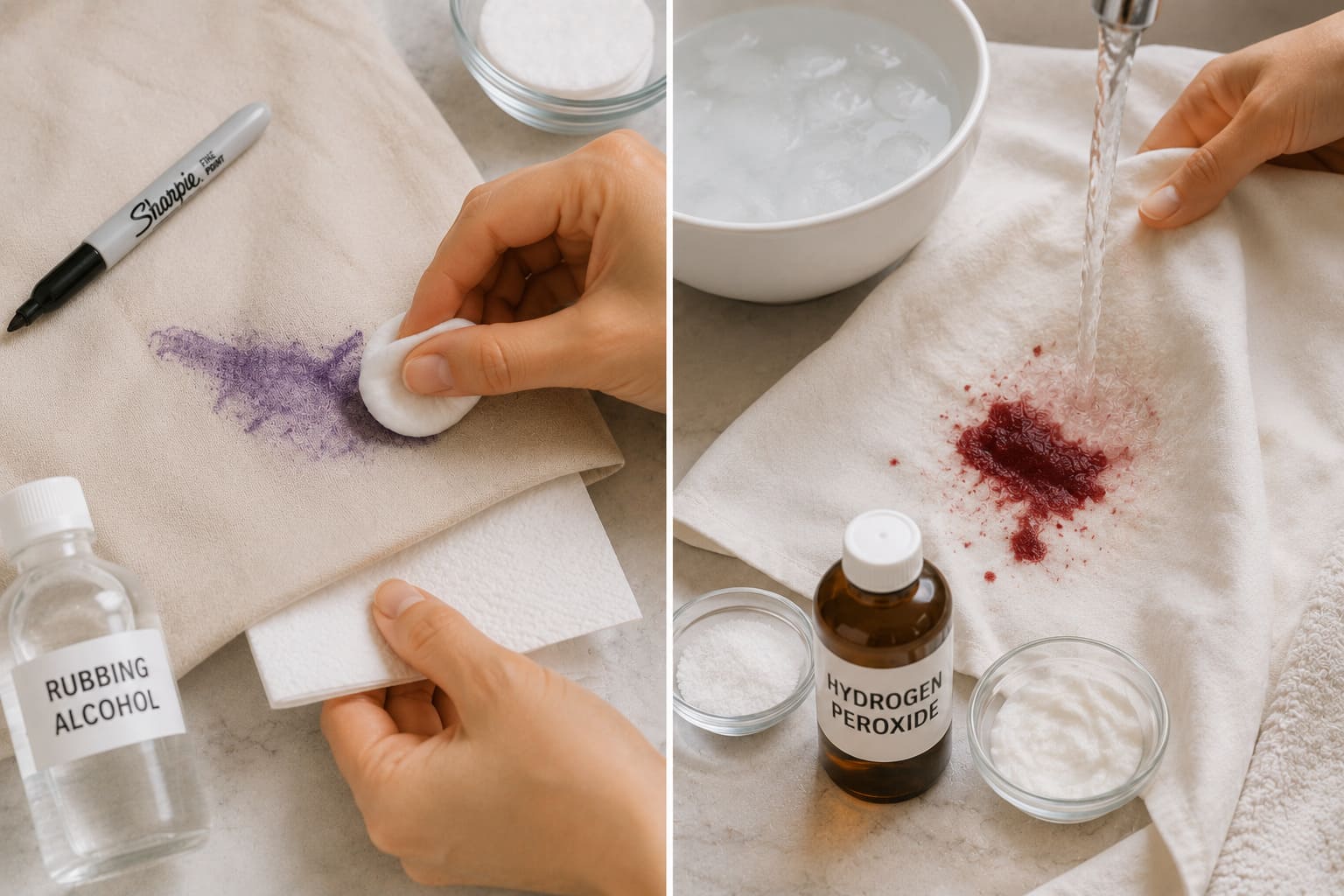
Candle wax rarely spills alone. Here are quick, reliable fixes for the stains that tend to turn up on the same tablecloth or outfit.
How to Get Sharpie Out of Fabric
For permanent marker, reach for rubbing alcohol or an alcohol-based hand sanitiser. Place a folded paper towel under the stain to catch the ink, then dab — do not rub — the mark with alcohol on a cotton ball, working from the outside in. As ink transfers to the paper towel underneath, move it to a clean spot so you are not re-depositing it. Rinse and launder once the mark has lifted. This is the standard answer to how to get sharpie out of fabric, and it works on most washable weaves.
How to Remove Blood From Fabric
The one rule that matters most for how to remove blood from fabric: use cold water only, never hot. Heat cooks the protein in blood and sets the stain for good. Rinse the fabric under cold running water from the back of the stain to push it out rather than through. For a stubborn or dried mark, soak in cold water, then dab with hydrogen peroxide — test on a hidden area first, as it is best on whites and colourfast fabrics — or work in a little salt paste. Launder cold and air-dry.
When It Is Time to Replace the Fabric
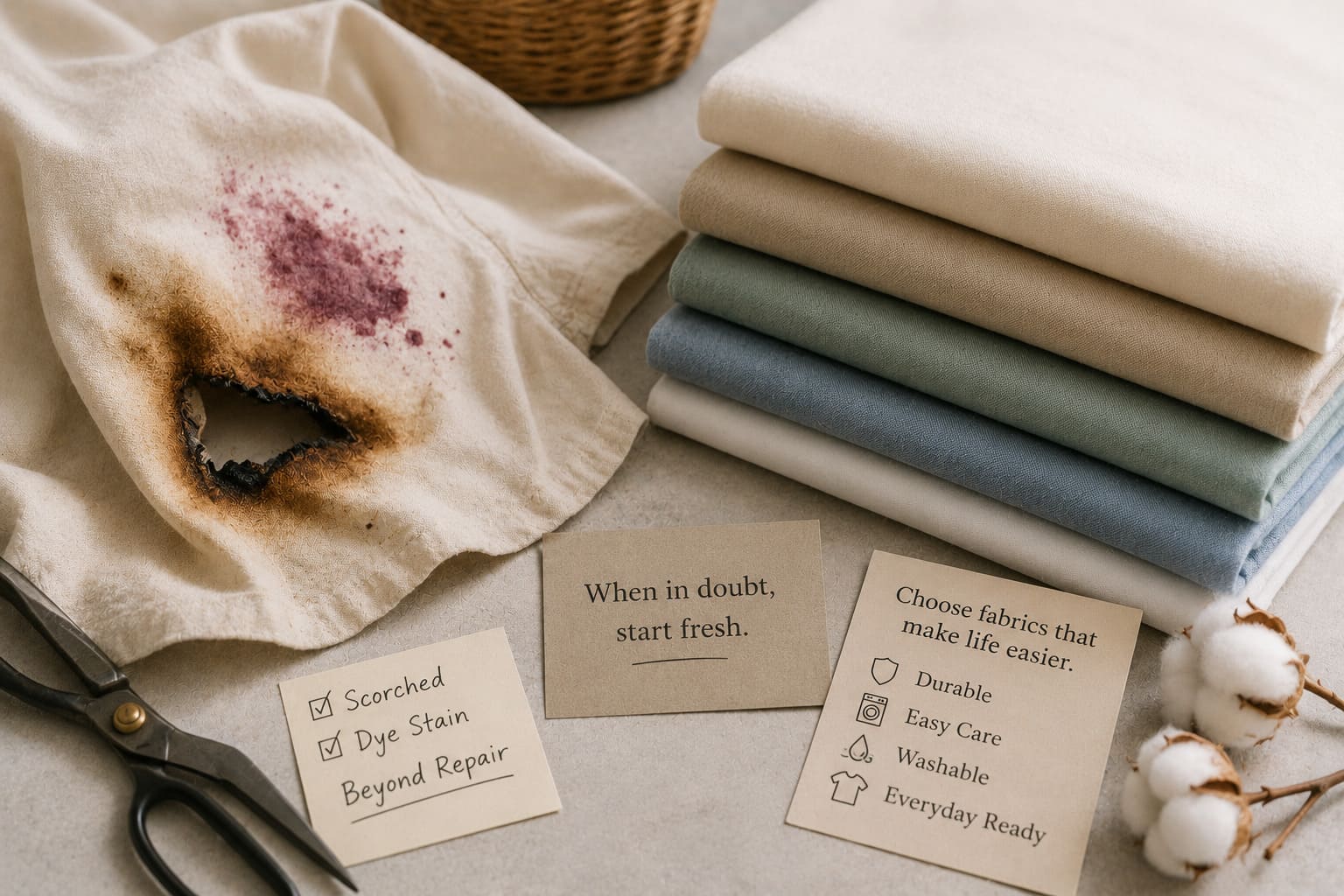
Sometimes wax wins — usually when a hot iron has already scorched a delicate fabric, or coloured wax has permanently dyed a pale, non-colourfast weave. If a length of fabric or a garment is genuinely beyond saving, it is better to start fresh than to keep fighting a set stain. When you do, choosing a durable, easy-care weave from the outset makes future spills far less stressful — a smooth, low-maintenance cotton is hard to beat for everyday pieces that see plenty of use.
Frequently Asked Questions
Can candle wax be completely removed from fabric?
In most cases, yes. On washable fabrics like cotton, linen, and muslin, the freeze, scrape, and iron method removes the wax entirely, and any oily or coloured residue can be treated with dish soap or rubbing alcohol before laundering. Delicate fabrics like silk are trickier and may need professional dry cleaning.
How do you remove candle wax from fabric without an iron?
Freeze the wax until brittle and scrape off as much as possible with a blunt edge, then treat the remaining greasy mark with dish soap and launder. Without heat you may not lift all of the wax, so this works best on sturdy, washable fabrics — for delicate pieces, dry cleaning is the safer no-iron route.
Does hot water remove candle wax?
Not reliably, and it can make things worse. Hot water softens wax into a smear and can set the oily residue and dye deeper into the weave. Hardening the wax with cold first, then melting it into paper with a warm iron, is far more effective.
How do you get coloured candle wax stains out of fabric?
Remove the wax first using the freeze, scrape, and iron method, then treat the leftover dye by dabbing rubbing alcohol on a cotton ball, working from the outside in. Launder as usual. Test alcohol on a hidden area first, especially on coloured or delicate fabrics.
Will candle wax wash out in the laundry on its own?
No. Putting a waxed item straight into the wash usually spreads the wax and can transfer it to other clothes. Always scrape and iron out the wax before laundering.
How do you remove wax from delicate fabrics like silk?
Chill and gently lift off the surface wax without applying heat or harsh solvents, then take the item to a professional dry cleaner and identify it as a wax stain. Direct heat and water can permanently damage silk and older dyes.
Leave a Comment

Fabcouture is an online fabric store to satisfy all your couture fabrics cravings for fabric connoisseurs. We delight in the fact that we source...
0 Comment