Velvet Fabric Guide: Types, Uses, Price & Care for Indian Winters
- By Fabcouture
Winter in India has its own dress code. Wedding season, Diwali parties and chilly evenings all call for one fabric that looks rich and keeps you warm: velvet. Once reserved for royal wardrobes, velvet fabric is now a go-to for lehengas, blouses, blazers, sherwanis and even sofa covers. This guide explains what velvet is, the main types, how it compares with similar fabrics, what you can make with it, what it costs per metre in India and how to look after it.
What Is Velvet Fabric?
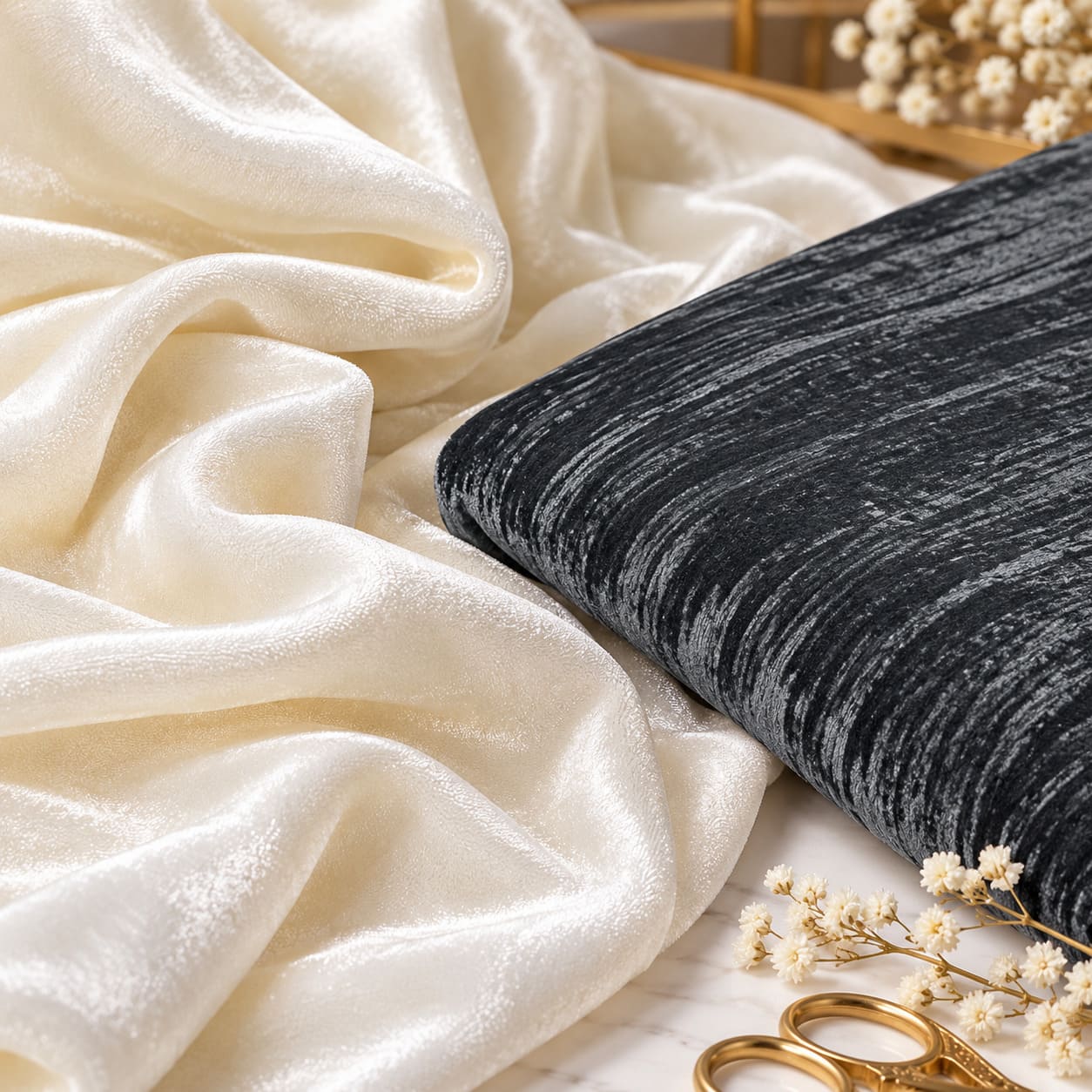
Velvet is a woven fabric with a short, dense, evenly cut pile on one side, which gives it a soft, plush feel and a deep, light-catching sheen. In India it is also called shaneel or makhmal. It is traditionally made on a special loom that weaves two layers of cloth face to face, joined by pile yarns, and then cuts them apart to create two pieces of velvet.
What Is Velvet Fabric Made Of?
Velvet was originally woven from silk, which is why it carried a royal tag for centuries. Today it is made from many fibres: cotton, viscose, silk, nylon and, most commonly, polyester. Polyester and viscose blends are popular because they are more affordable, easier to care for and hold their pile well. The fibre matters more than the weave when it comes to feel, drape and price.
Types of Velvet Fabric
Not every velvet looks or behaves the same. Here are the types you will come across most often when buying velvet dress material in India:
- Plain velvet: A smooth, solid-colour velvet with an even pile. It is the most versatile choice for lehengas, gowns, blouses and jackets.
- Micro velvet: A finer, lighter velvet that drapes easily and is simple to stitch. It suits everyday festive wear and warmer regions.
- Crushed velvet: Twisted while wet so the pile lies in different directions, giving a crinkled, shimmering finish that looks dramatic under lights.
- Silk and viscose velvet: Softer and more fluid, with a luxurious fall. These are the choice for bridal lehengas and premium outfits.
- Stretch velvet: Blended with Lycra or spandex for stretch, ideal for fitted blouses, dresses and tops.
- Printed velvet: Plush velvet with floral, digital or block prints for a more playful, modern look. Browse our printed velvet fabric range to see the patterns.
- Embroidered velvet: Velvet finished with cutwork, sequins, zari or hand embroidery. Our embroidered velvet fabric collection is made for bridal and festive wear.
Fabrics Similar to Velvet
If velvet feels too heavy or too expensive for your project, a few fabrics come close, though none matches its sheen and drape exactly.
- Velveteen: A cotton fabric with a short pile. It is matte, sturdy and less shiny than velvet.
- Velour: A stretchy knit with a soft pile, common in loungewear and tracksuits.
- Corduroy: Cut pile arranged in ridges, durable and casual rather than dressy.
- Chenille: Made from fuzzy yarns, popular for upholstery and throws.
For pure warmth rather than plushness, a structured woolen fabric such as tweed is a better pick for coats and blazers, while velvet works best when you want a festive look with winter comfort.
What Can You Make With Velvet Dress Material?
Velvet is one of the most flexible fabrics for Indian wardrobes. Popular uses include:
- Lehengas and anarkalis for winter weddings, where velvet's richness photographs beautifully.
- Blouses paired with sarees. A velvet blouse instantly lifts a plain silk fabric saree.
- Blazers, waistcoats and sherwanis for men's festive and wedding wear.
- Salwar suits, kurtas and dupattas for cooler months.
- Home décor such as curtains, cushion covers, sofa upholstery and bed runners.
Living in a warm or humid region? Choose lighter micro velvet instead of a heavy pile, and save the heavier silk or viscose velvet for cold-weather occasions.
Velvet Fabric Price Per Metre in India
Velvet prices vary with the fibre, GSM (weight), width and finish. As a general guide at FabCouture, plain velvet fabric starts around ₹275 per metre for micro velvet and goes up to roughly ₹760 per metre for silk and viscose velvet. Printed velvet costs a little more, and embroidered velvet is priced higher because of the detailing involved. If you are buying in bulk for a boutique or label, wholesale discounts are available, and orders above ₹999 get free delivery with cash on delivery, @ best price.
A quick tip: always compare the width and GSM, not just the per-metre rate. A wider, heavier velvet may cost more but needs less fabric and gives a better finish.
How to Care for Velvet Fabric
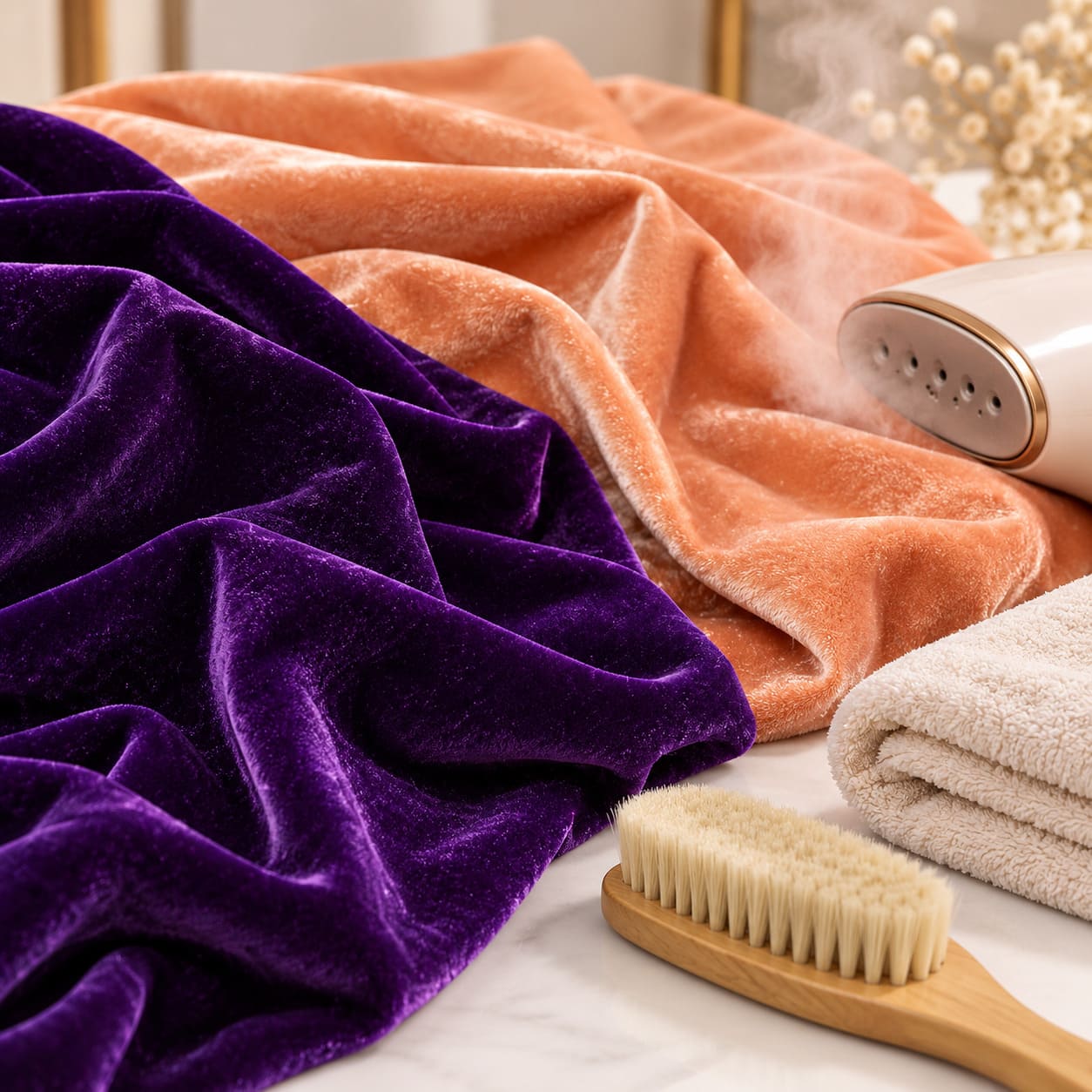
- Check the label first. Silk and viscose velvet are best dry cleaned, while many polyester velvets can be gently hand-washed in cold water.
- Never iron directly on the pile. It flattens the fibres. Use a steamer or hold a steam iron just above the fabric.
- Brush along the pile. A soft brush lifts crushed areas and removes dust.
- Store it hanging or rolled, not folded tightly, to avoid permanent creases.
- Blot spills instead of rubbing, then dry clean for stubborn stains.
How to Choose the Right Velvet
Start with the occasion. Go for silk or viscose velvet for a bridal or heavy festive outfit, micro or stretch velvet for blouses and everyday wear, and crushed or printed velvet when you want texture or pattern. Then check the pile direction before cutting, since velvet looks darker or lighter depending on which way the pile runs. Cut all your pieces in the same direction for an even colour.
Frequently Asked Questions
What is velvet fabric?
Velvet is a woven fabric with a dense, short, cut pile that feels soft and looks lustrous. It can be made from silk, cotton, viscose or polyester and is widely used for festive wear, winter clothing and home décor.
Is velvet fabric good for winter?
Yes. Velvet's pile traps warmth, making it comfortable for cooler months while still looking dressy. Heavier silk and viscose velvets are best for cold weather, while lighter micro velvet suits milder winters.
What is the price of velvet fabric per metre?
Plain velvet in India typically ranges from about ₹275 to ₹760 per metre depending on the fibre, weight and finish. Printed and embroidered velvets cost more.
Which fabric is similar to velvet?
Velveteen, velour, corduroy and chenille are the closest alternatives. They share a soft pile but have less sheen and drape than true velvet.
How do you wash velvet fabric?
Follow the care label. Most velvets do best with dry cleaning, though some polyester velvets can be hand-washed in cold water. Never wring or iron directly on the pile.
Ready to start stitching? Explore our full collection of velvet dress material, from everyday plain velvet to rich embroidered pieces, and find the right fabric for this winter and wedding season.
Leave a Comment

Fabcouture is an online fabric store to satisfy all your couture fabrics cravings for fabric connoisseurs. We delight in the fact that we source...
0 Comment