How to Sew Lace onto Fabric: 7 Beautiful Ideas
- By Fabcouture
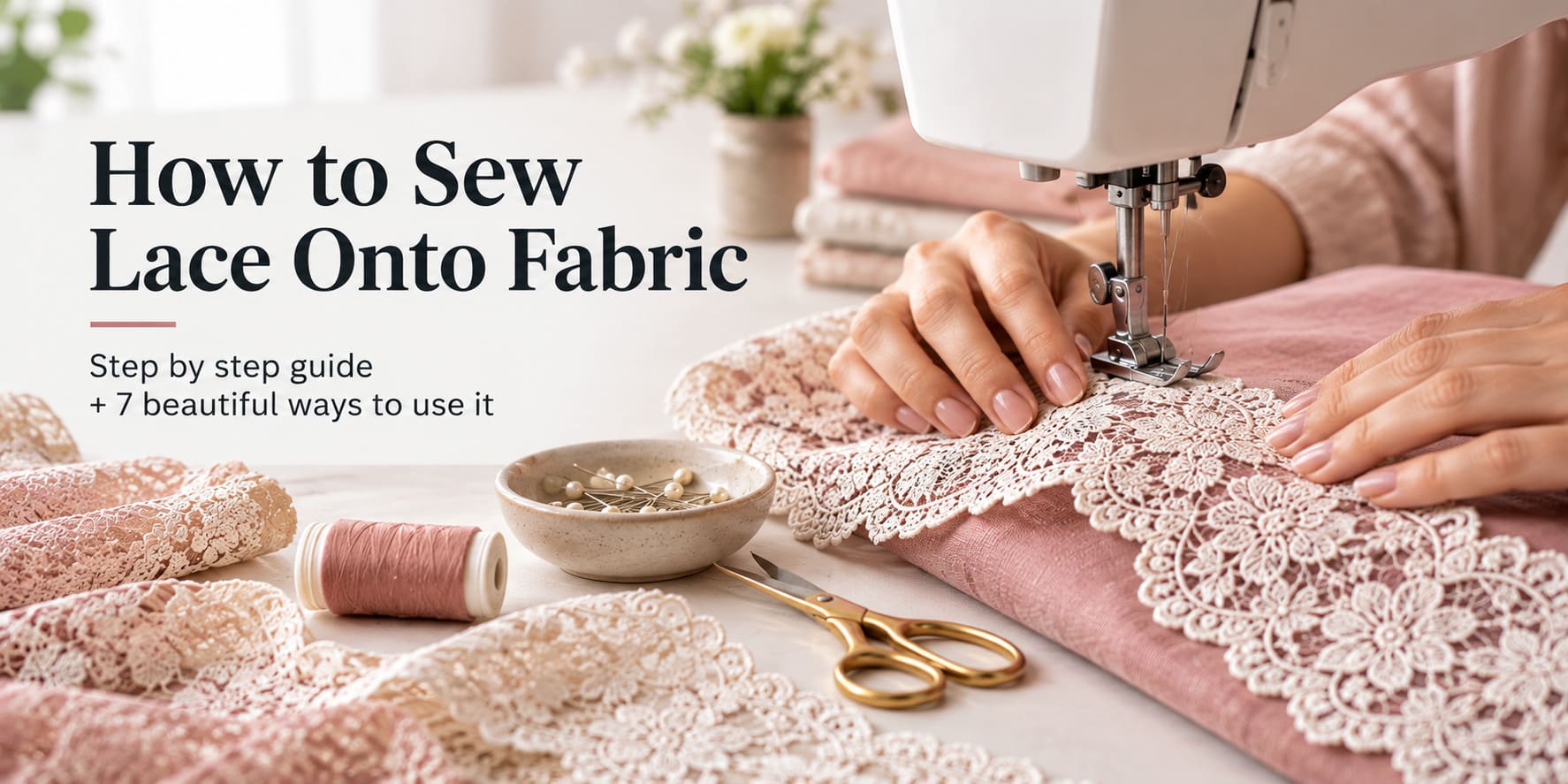
Lace has a reputation for being tricky to work with — slippery, delicate, and easy to pucker or tear if you rush it. But sewing lace onto fabric is a skill almost anyone can pick up with the right technique, and once you have it, a whole world of styling options opens up. A plain kurti border, a bridal blouse neckline, a sheer dupatta overlay — lace is one of the few fabrics that can transform a simple garment into something special with very little effort. This guide walks you through exactly how to sew lace onto fabric, step by step, and then shows you seven beautiful ways to actually use it once you've mastered the basics.
Quick Answer
To sew lace onto fabric, pin it carefully in place along the edge you want to attach, use a fine, sharp needle with a lightweight thread that matches the lace, and stitch slowly along the scalloped or straight edge — either by hand with a small whip stitch or by machine using a narrow zigzag on low tension. Always test on a scrap piece first, and use a stabiliser underneath sheer or delicate lace to stop it from puckering.
Why Lace Feels Intimidating (and Why It Shouldn't)
Lace makes people nervous for a few honest reasons: it is often sheer, it can fray at cut edges, and its open, decorative weave gives a sewing machine less fabric to actually grip. None of that means it is difficult — it just means lace rewards patience more than speed. Go slow, use the right needle and stabiliser, and lace behaves far better than most people expect.
What You'll Need
- A fine, sharp needle — a size 70/10 or 80/12 works well for most laces
- Lightweight thread that matches or complements your lace colour
- Fine pins or sewing clips, since pins can snag delicate lace
- A lightweight stabiliser or tissue paper for sheer or very delicate lace
- Sharp fabric scissors and a seam ripper, just in case
How to Sew Lace Onto Fabric: Step by Step
Step 1 — Prepare and pin
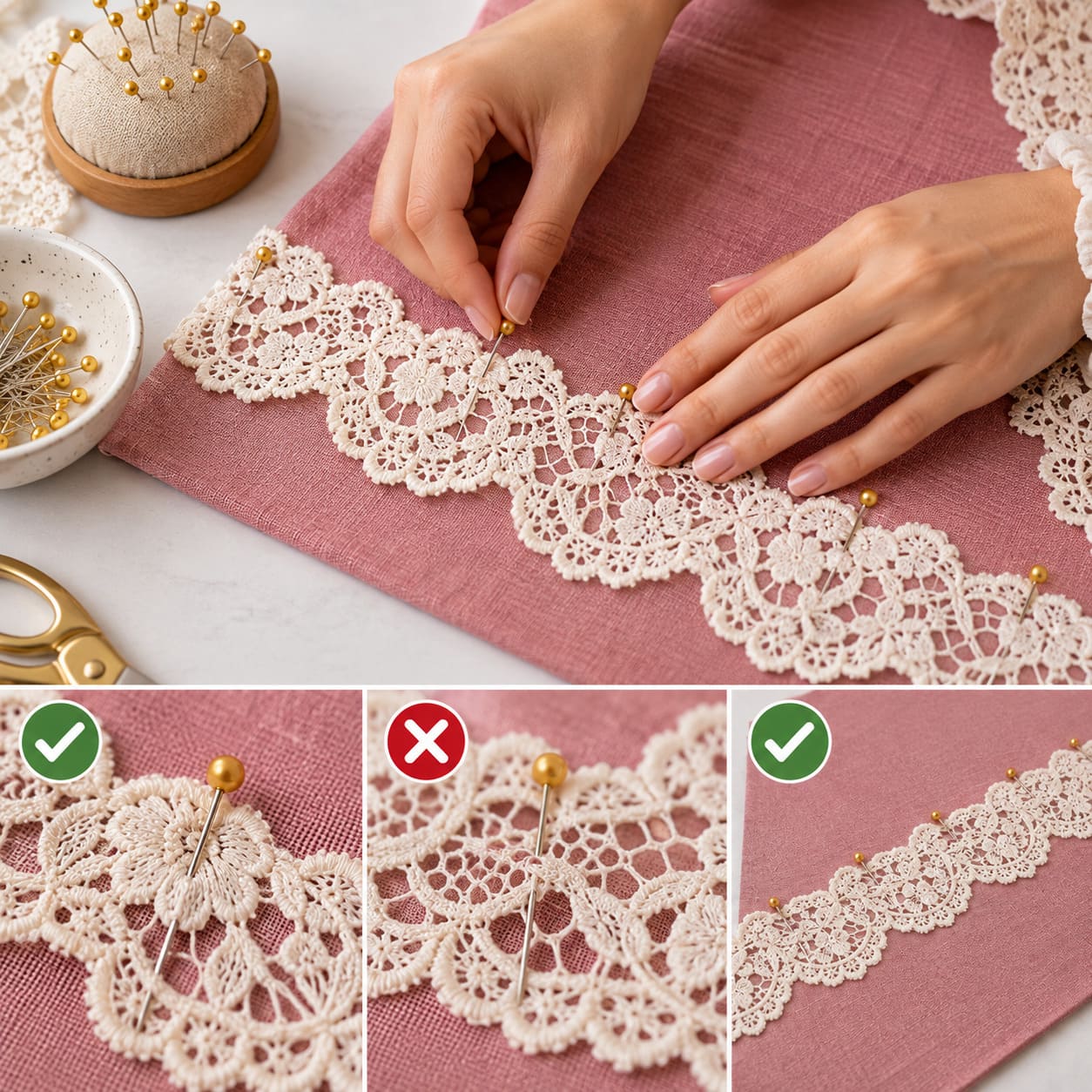
Lay your base fabric flat and position the lace exactly where you want it. Pin sparingly, only through the sturdier parts of the lace's pattern rather than through open, sheer sections, which can distort under pressure. For long borders, pin every few inches and check the lace is lying flat with no puckering before you sew.
Step 2 — Stabilise if needed
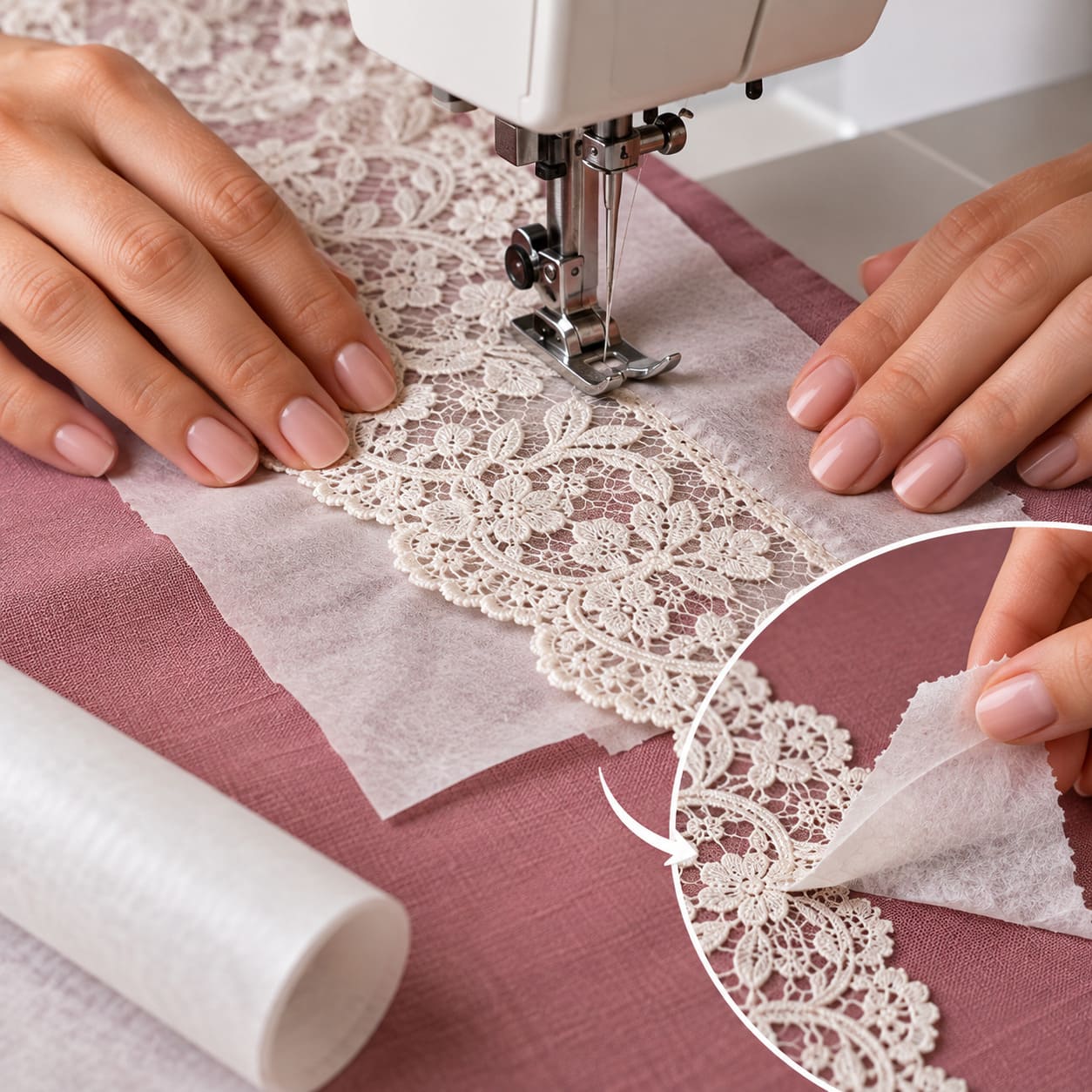
If you are working with sheer net lace or a very fine Chantilly lace, slide a piece of tissue paper or a lightweight tear-away stabiliser underneath the fabric before stitching. This stops the lace from being pulled down into the machine and keeps your stitch line smooth. Once you are done sewing, gently tear the stabiliser away.
Step 3 — Choose your stitch
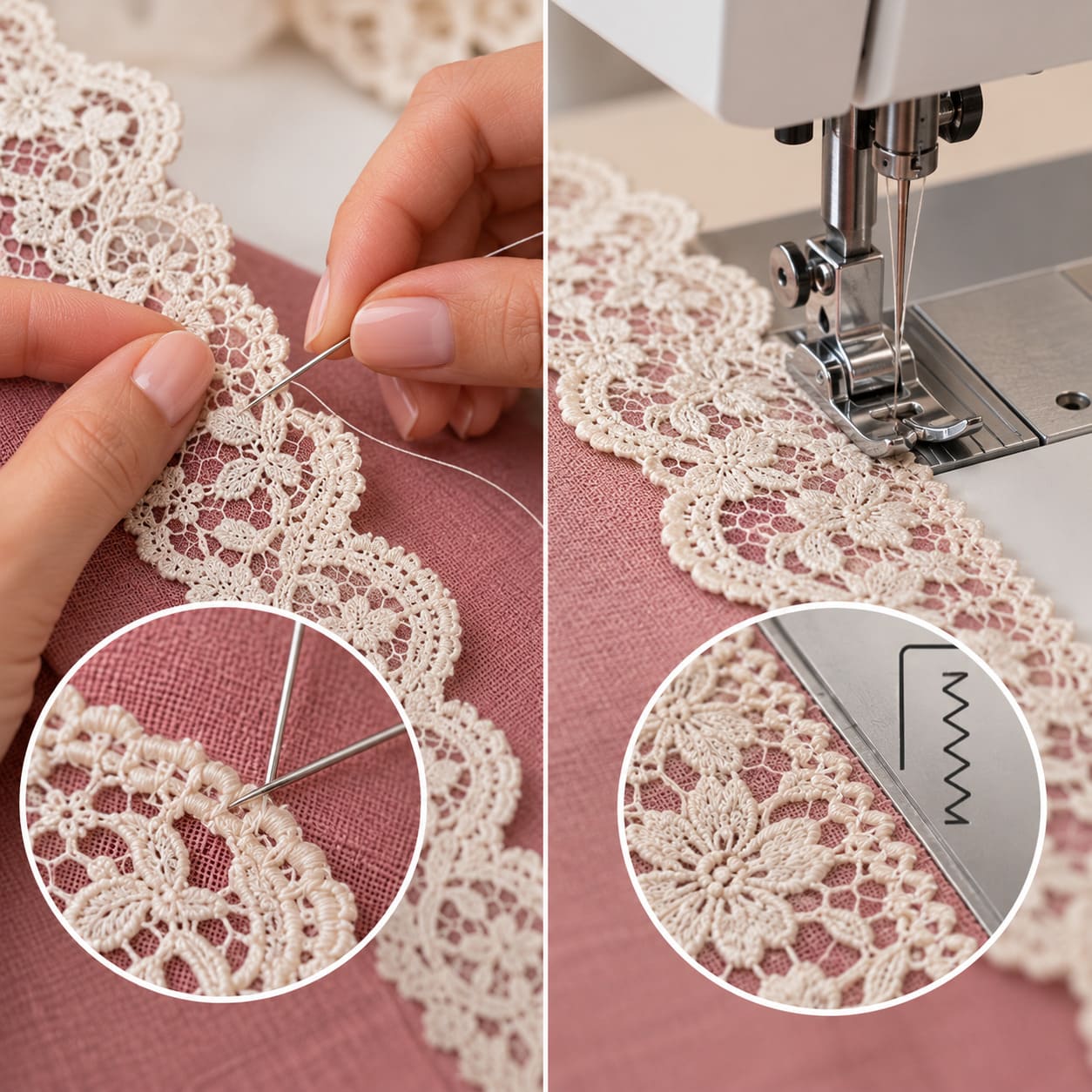
For hand sewing, a small whip stitch or slip stitch along the edge of the lace works beautifully and keeps the stitching nearly invisible from the front. For machine sewing, use a narrow, short zigzag stitch rather than a straight stitch — zigzag has a little give, which stops the lace and base fabric from puckering against each other as they move slightly differently under tension.
Step 4 — Sew slowly and follow the pattern
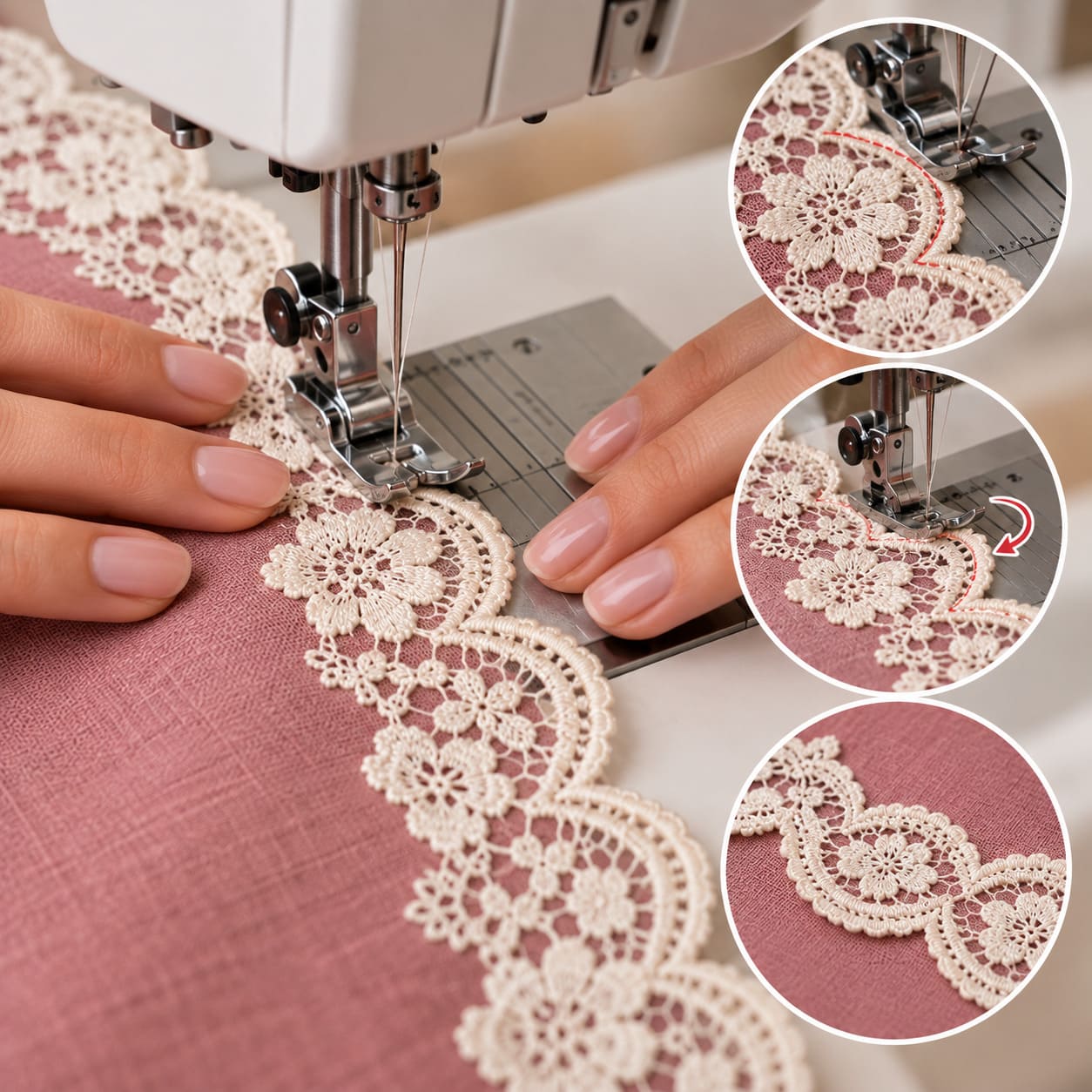
If your lace has a scalloped or shaped edge, follow that natural edge with your stitching rather than sewing in a straight line — it looks far more finished and intentional. Go slowly around curves and corners, lifting the presser foot and pivoting as needed rather than forcing the fabric through.
Step 5 — Finish the raw edges
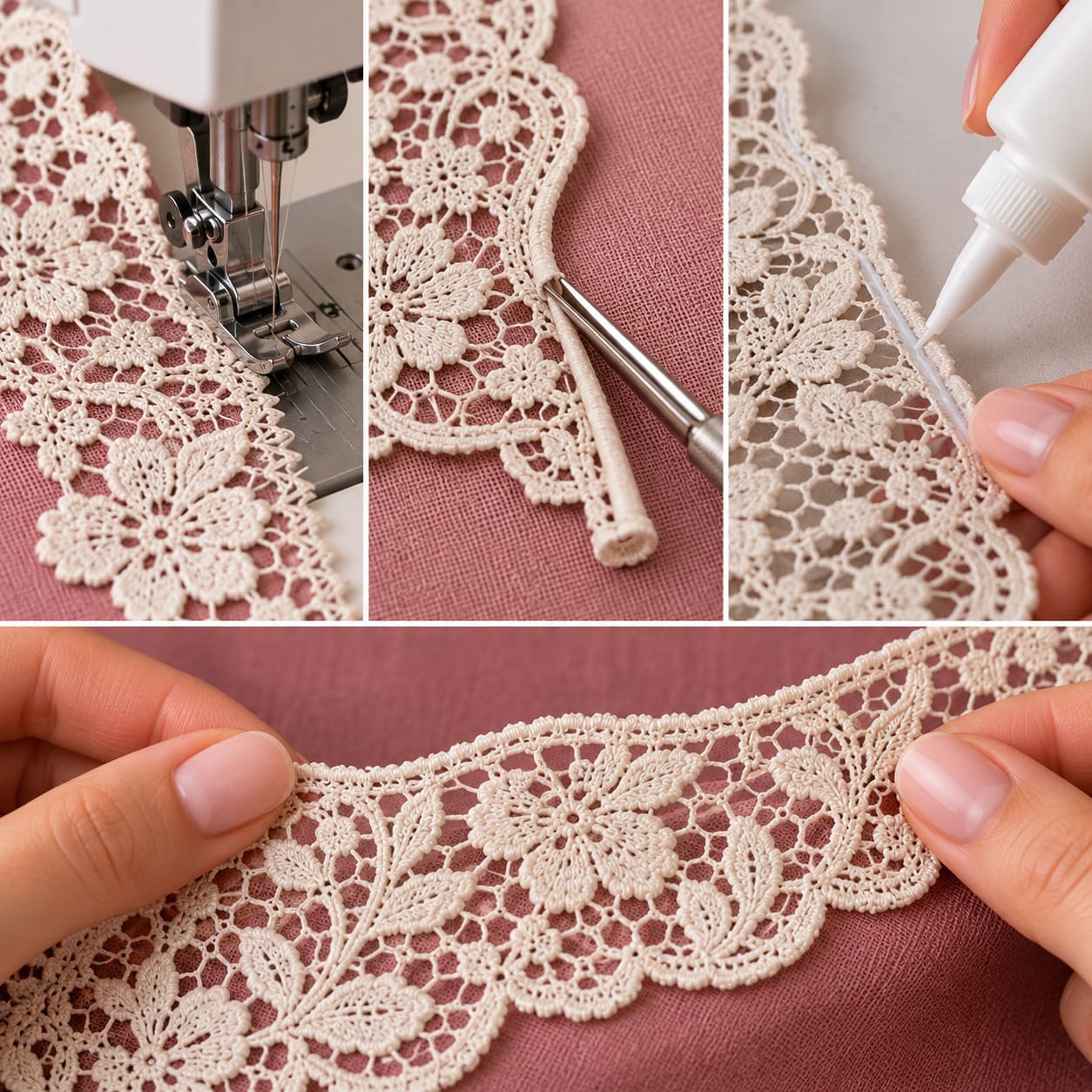
If your lace has a cut edge that could fray — common with cut-work lace — finish it with a narrow zigzag, a rolled hem, or a small line of fabric glue on the reverse before wearing or washing. This one step is what separates a lace edge that lasts from one that unravels after a wash or two.
7 Beautiful Ways to Use Lace Fabric
1. Bold saree and dupatta borders
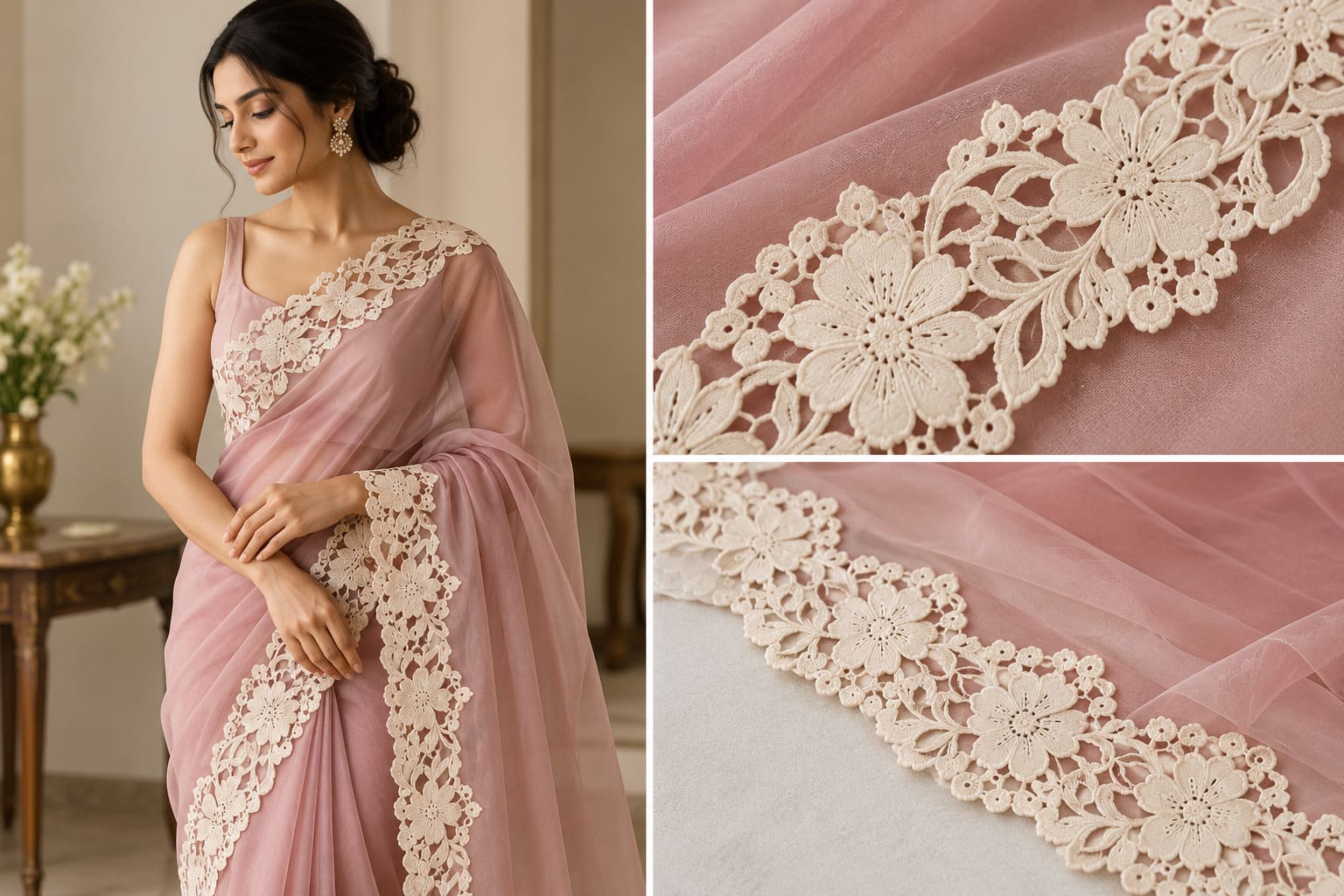
A graphic, cut-in border transforms a plain saree or dupatta instantly, and it is one of the easiest lace applications for beginners since the pattern is already cut to shape. Cut-work lace is purpose-built for this — its bold, dimensional motifs make a striking edge without needing embroidery underneath.
2. Bridal blouses and necklines
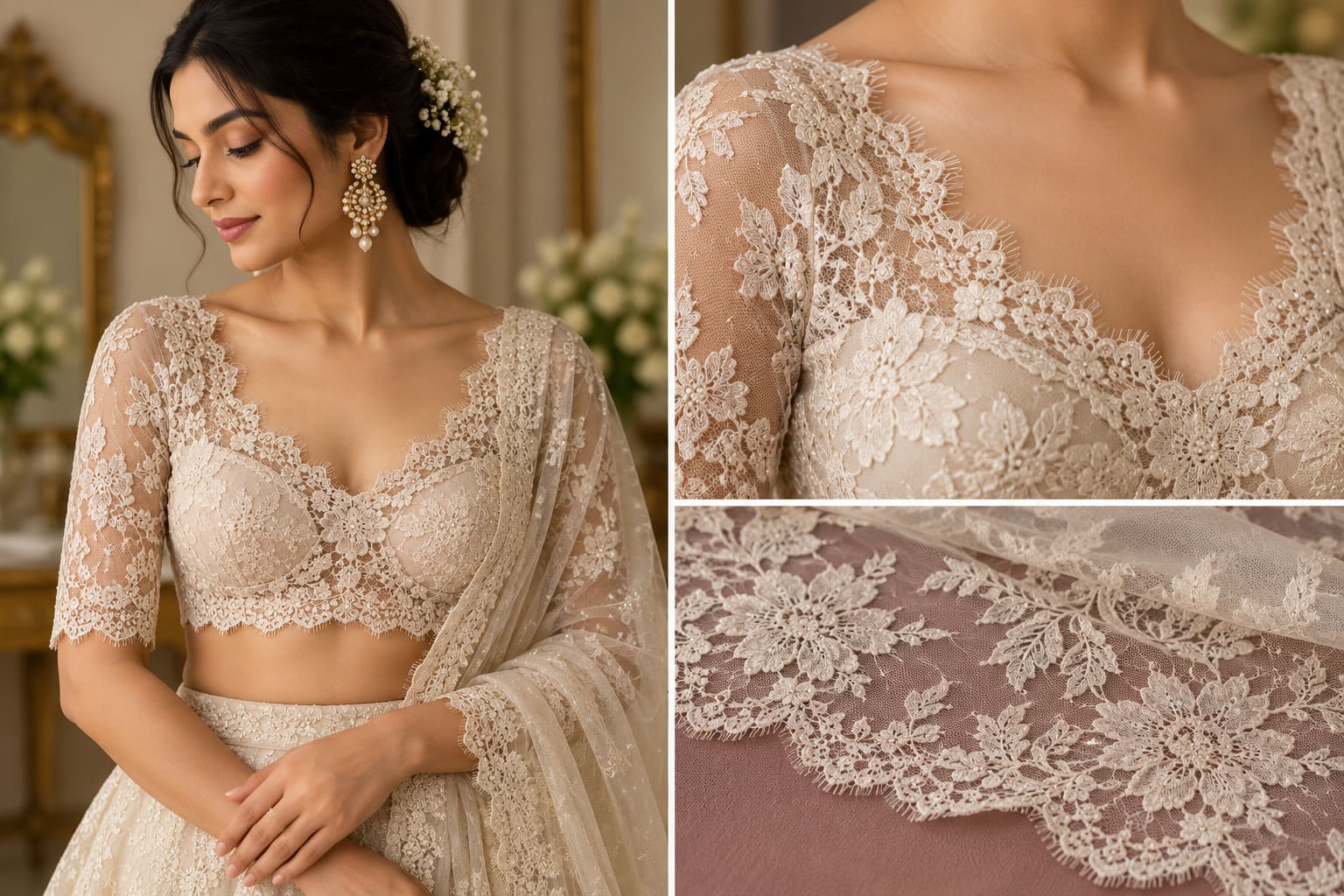
For a refined, romantic finish on a bridal or festive blouse, nothing beats fine, delicate florals on a soft net ground. Chantilly lace is the classic choice here — light enough not to overwhelm, detailed enough to be the focal point of the outfit.
3. Everyday kurti trims
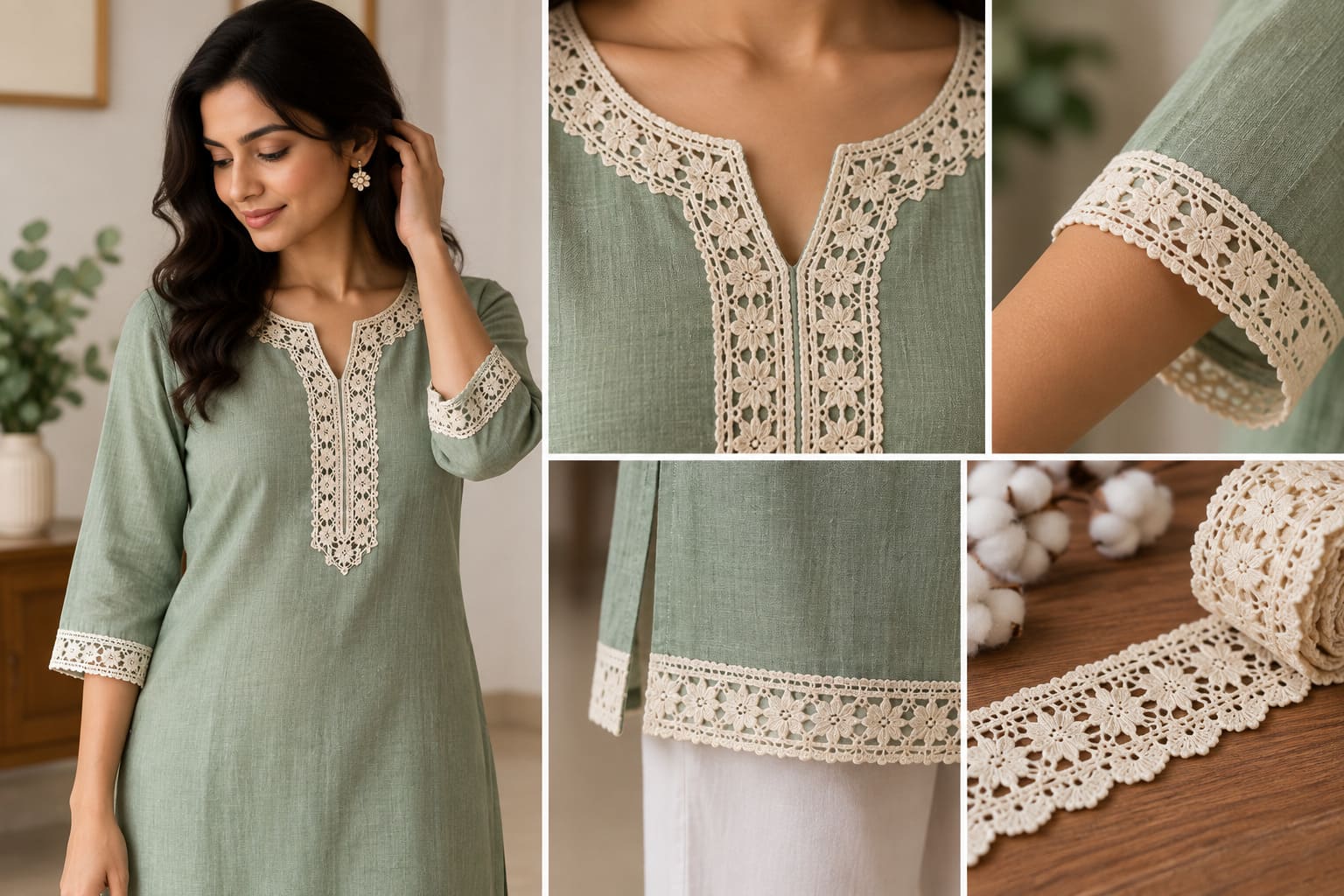
Not every lace application needs to be for a special occasion. A simple trim along a kurti neckline, sleeve, or hem adds detail to daily wear without looking fussy. Cotton lace is ideal here — breathable, natural-looking, and easy to sew onto everyday fabrics.
4. Sheer overlays and suit sets
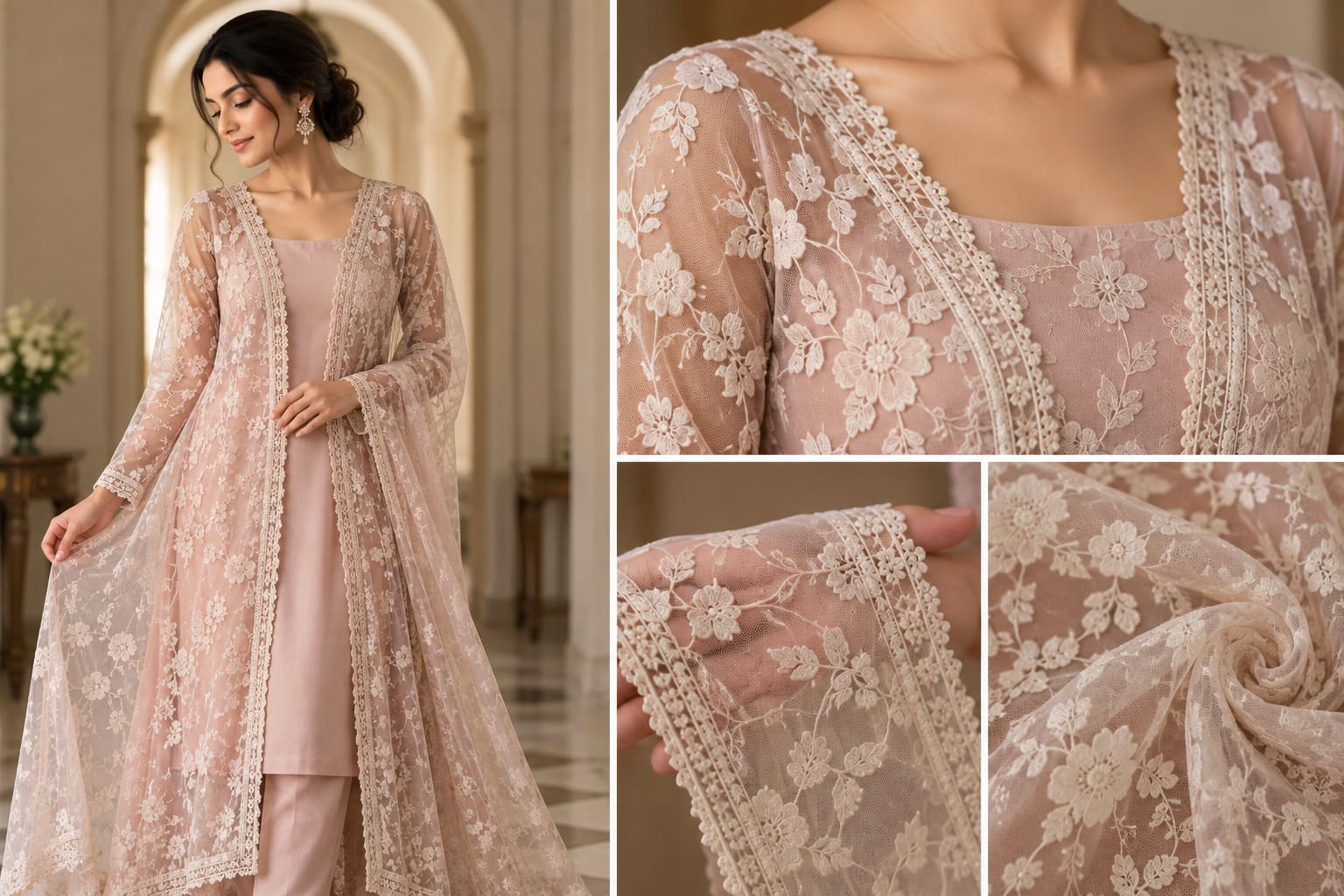
For a festive suit set or a layered evening look, a sheer overlay adds texture and interest without weight. Net lace is the natural choice, since its airy base is designed to be layered over a lining fabric.
5. Statement sleeves
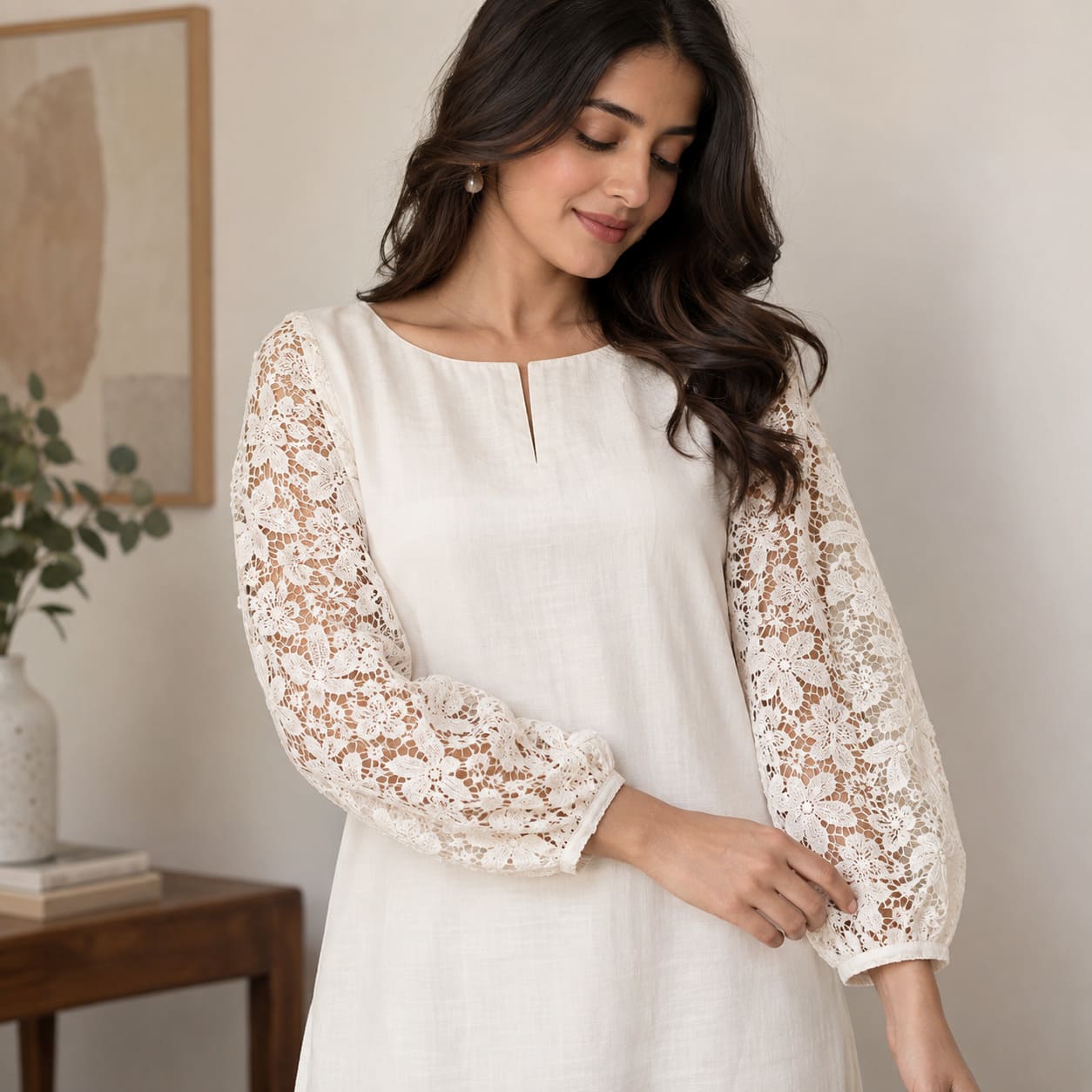
Full lace sleeves on an otherwise plain top or kurta are an easy way to add drama without redesigning the whole garment. Because sleeves are a smaller, more contained shape, they are also one of the most beginner-friendly places to practise your lace-sewing technique.
6. Contrast layering over solid fabrics
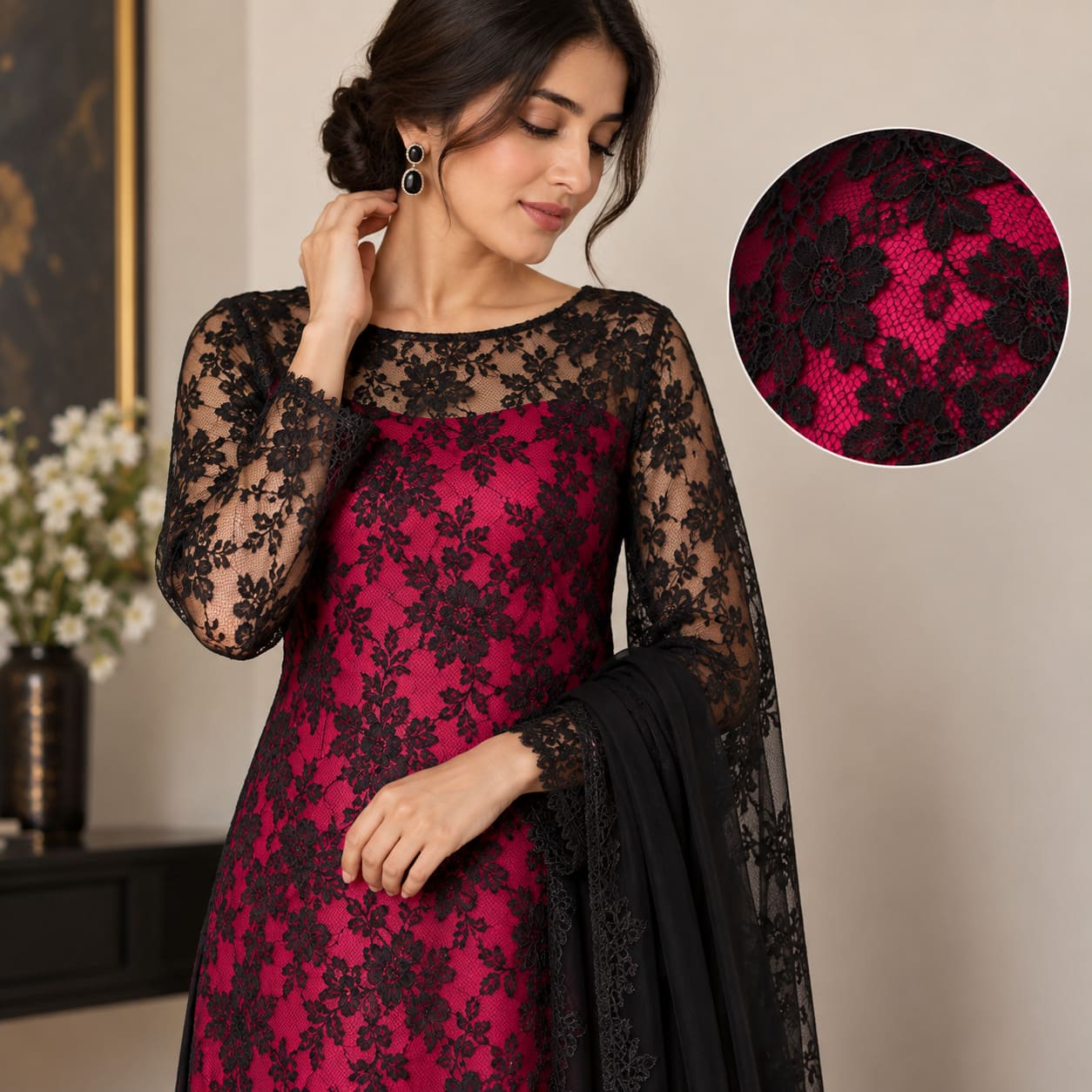
Layering a patterned lace over a solid, contrasting base fabric — think black net lace over a bright silk lining — creates a rich, dimensional look that a single fabric cannot achieve on its own. This works particularly well with net and Chantilly lace, where the sheerness lets the base colour show through.
7. Fully lace garments
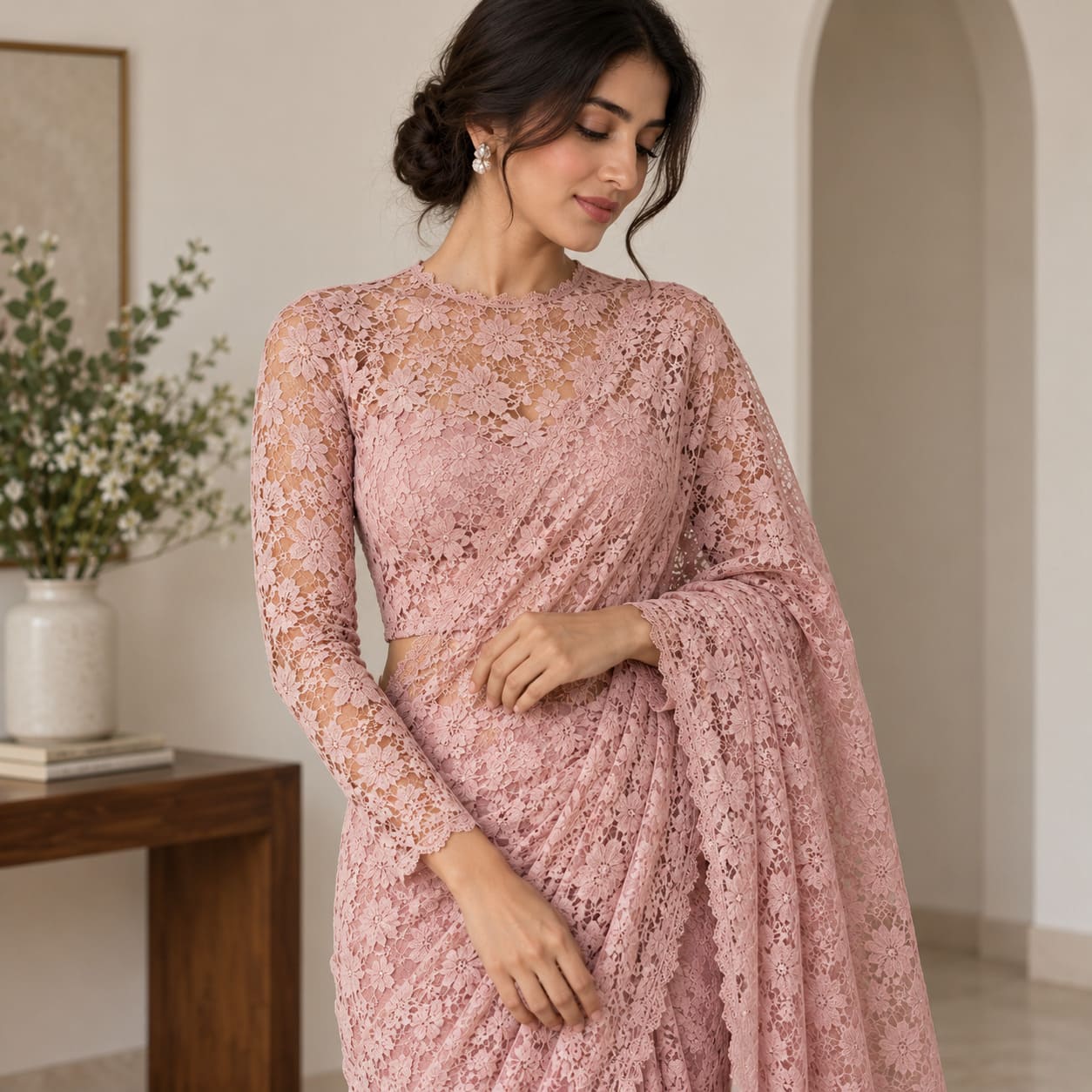
For a true statement piece, lace can be the entire garment rather than a trim or accent — a full lace blouse, dress, or dupatta. This is where quality matters most, so it's worth browsing the complete lace fabric range to compare weights, patterns, and finishes before committing to a full design.
Common Lace-Sewing Mistakes to Avoid
- Using a thick or blunt needle. It snags delicate lace threads and can leave visible holes. Always use a fine, sharp needle.
- Skipping the stabiliser on sheer lace. Without it, the machine can pull the lace down into the feed dogs and distort your stitch line.
- Stretching lace as you sew. Let the fabric feed naturally rather than pulling it taut, especially with net and stretch-prone laces.
- Sewing in a straight line over a scalloped edge. It looks unfinished. Always follow the lace's natural pattern.
- Not testing on scrap fabric first. Tension and stitch settings vary by lace type — a quick test saves you from redoing a finished border.
Frequently Asked Questions
How do you sew lace onto fabric by hand?
Pin the lace in place, then use a small whip stitch or slip stitch along the edge with a fine needle and lightweight thread, keeping your stitches close together and following the lace's natural pattern for the neatest finish.
What is the best stitch for sewing lace on a machine?
A narrow, short zigzag stitch is generally best for machine-sewing lace. It has enough give to prevent puckering between the lace and base fabric, unlike a straight stitch, which can pull the seam tight and distort delicate lace.
What else can you do with lace fabric besides trims and borders?
Lace can be used for full garments, sheer overlays on suit sets, statement sleeves, layered looks over contrasting fabrics, and even accessories like clutches and dupattas. It doesn't have to be limited to edges and trims.
How do you cut lace fabric without it fraying?
Use sharp fabric scissors and cut slowly, following the pattern where possible rather than cutting straight lines. For lace prone to fraying, a light coat of fabric glue or a narrow zigzag stitch along the cut edge afterwards will stop it from unravelling.
Where can I buy lace fabric online in India?
FabCouture offers a wide range of lace fabric online, including Chantilly lace, cotton lace, cut-work lace, and net lace, with free delivery and cash on delivery available on orders above ₹999.
Leave a Comment

Fabcouture is an online fabric store to satisfy all your couture fabrics cravings for fabric connoisseurs. We delight in the fact that we source...
0 Comment